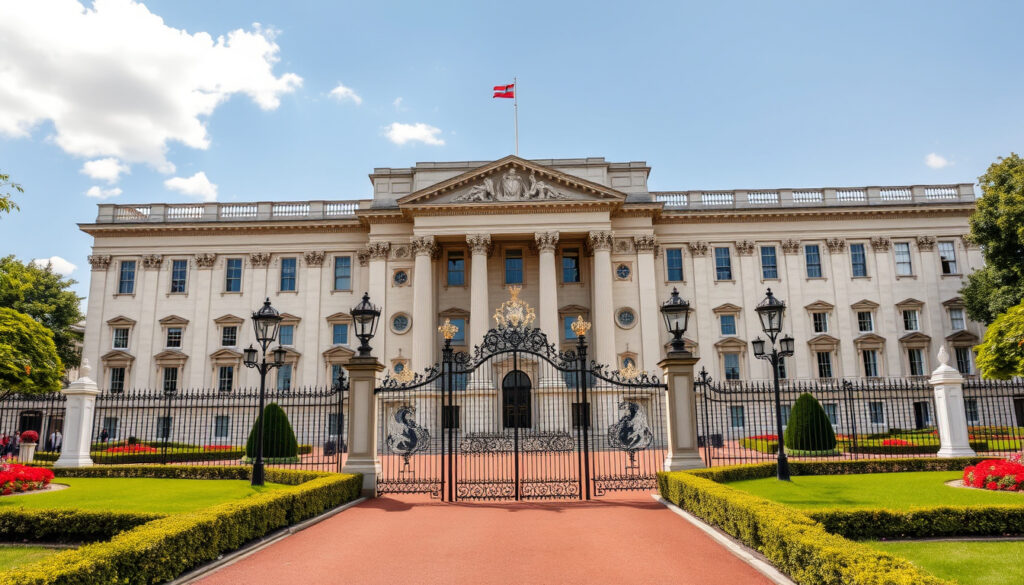
When Was Buckingham Palace Built – Full History and Timeline
Buckingham Palace, the official London residence of the British monarch, began not as a grand palace but as a private townhouse constructed around 1703. What started as Buckingham House, commissioned by John Sheffield, 1st Duke of Buckingham and Normanby, evolved over more than two centuries of expansion and remodeling into one of the world’s most recognizable royal landmarks. Understanding when Buckingham Palace was built requires tracing its transformation from a 17th-century aristocratic home to the principal royal residence it became under Queen Victoria in 1837.
The site itself carries centuries of royal history. Located on land that formed part of the Manor of Ebury, the grounds had connections to the British crown dating back to William the Conqueror, who granted the land away nearly 500 years before the first structure appeared. Henry VIII acquired the property from Westminster Abbey in 1536, placing it in royal hands for the first time in centuries.
Today, the palace encompasses approximately 828,000 square feet across 775 rooms, standing as both a working administrative center for the monarchy and a symbol of British royal heritage. Yet its origins were far more modest, built to serve the domestic ambitions of a single nobleman rather than the needs of a reigning monarch.
When Was Buckingham Palace Originally Built?
Key Insights on Buckingham Palace’s Origins
- The palace was not originally built as a royal residence—it began as a private townhouse for the Duke of Buckingham
- The original 1703 construction was designed by architect William Winde as a three-floored central block with flanking service wings
- John Sheffield, 1st Duke of Buckingham and Normanby, commissioned the structure after acquiring the lease in 1698
- The site had been associated with royalty since William the Conqueror granted the land nearly 500 years earlier
- George III purchased the property in 1761 for £21,000 and renamed it The Queen’s House
- Queen Victoria became the first monarch to live there full-time beginning in 1837
- The building remained incomplete and problematic for early royal occupants, with issues including smoky chimneys and insufficient bedrooms
| Fact | Details | Year |
|---|---|---|
| Original Owner | Duke of Buckingham (John Sheffield) | 1703 |
| Architect (Initial) | William Winde | 1703 |
| Royal Purchase | George III bought for Queen Charlotte | 1761 |
| Purchase Price | £21,000 | 1761 |
| Key Expansion Architect | John Nash | 1820s |
| Became Official Residence | Queen Victoria | 1837 |
Who Commissioned and Designed Buckingham Palace?
The Vision Behind Buckingham House
John Sheffield, 1st Duke of Buckingham and Normanby, acquired the lease to the Ebury estate in 1698. His vision was to create a grand townhouse befitting his elevated status among English nobility. Rather than purchasing an existing structure, Sheffield commissioned an entirely new building designed in the grand townhouse style that was popular among the English aristocracy during this period.
The architect chosen for this undertaking was William Winde, who designed the structure as a three-floored central block with wings positioned symmetrically on either side. This layout provided both the domestic comfort expected of an aristocratic residence and the visual grandeur that Sheffield’s position demanded.
William Winde’s Architectural Design
Winde’s design reflected the architectural tastes of late 17th-century England, emphasizing symmetry and classical proportions. The original Buckingham House featured a main central block housing the primary reception rooms and private apartments, flanked by service wings that contained kitchens, staff quarters, and storage spaces. This configuration would prove adaptable enough to accommodate the dramatic expansions that followed centuries later.
William Winde’s original west garden front remains largely unchanged despite subsequent renovations, serving as the oldest surviving portion of the building’s exterior fabric.
When Did Buckingham Palace Become the Royal Residence?
The Purchase by George III
In 1761, Sheffield’s son Charles sold Buckingham House to King George III for £21,000. The king intended the property as a private residence for his wife, Queen Charlotte, and the royal family. Under the royal purchase, the property was renamed The Queen’s House, reflecting its designation as the primary London residence for the queen consort rather than the reigning monarch.
George III initiated remodeling work beginning in 1762, and an Act of Parliament in 1775 formally granted the property to Queen Charlotte. The house became a family home for the royal children, with 14 of Charlotte’s 15 children born within its walls. Compared to the older and more formal St. James’s Palace, Buckingham House offered a more comfortable and intimate environment for the growing royal family.
Queen Victoria Makes It Official
The transformation from private residence to royal palace occurred gradually during the reign of George IV, who commissioned extensive remodeling and expansion work beginning in 1826. However, it was Queen Victoria who finally established Buckingham Palace as the principal royal residence in 1837, becoming the first monarch to live there full-time.
The early years of Victoria’s residence revealed significant problems with the property. Smoky chimneys, cold rooms, and insufficient bedrooms plagued the palace, requiring ongoing repairs and modifications. A new wing was eventually added to address the bedroom shortage, and the building gradually became more suitable for its role as the center of royal life.
Following Prince Albert’s death in 1861, Queen Victoria spent considerable time away from Buckingham Palace, preferring other royal residences. This period marked one of the few times the palace was largely abandoned by its intended occupant.
Key Expansions and Transformations Over Time
The George IV Remodeling
George IV initiated the most dramatic transformation in the palace’s history when he hired architect John Nash in 1826 to convert Buckingham House into a proper palace. Nash’s designs embraced French neoclassical principles and included significant alterations to the gardens and the creation of the famous Marble Arch entrance, which would later be relocated to Hyde Park in 1851.
The scope of Nash’s work was ambitious. He reshaped the gardens, added new wings, and fundamentally altered the building’s character. However, costs escalated dramatically by 1829, eventually leading to Nash’s dismissal from the project. The financial overruns and disputes over the work created controversy that followed the project for years.
Edward Blore Completes the Work
Edward Blore took over from Nash under the reign of William IV and completed the transformation by adding three wings around a central courtyard. Interestingly, William IV showed little personal interest in occupying Buckingham Palace, preferring Clarence House and even offering the structure as a new Parliament building following the devastating 1834 fire at Westminster—an offer Parliament declined.
Further modifications came in 1847 when Blore expanded the Mall front, creating what is now known as the Fore Court. The east front received its most iconic appearance in 1913 when Sir Aston Webb redesigned the facade to serve as a grand backdrop for the newly unveiled Queen Victoria Memorial, completing the visual identity the palace maintains today.
The current Buckingham Palace bears little resemblance to Winde’s original 1703 townhouse. Successive monarchs added, demolished, and rebuilt sections over more than two centuries, with the only surviving exterior element being Winde’s west garden front.
Buckingham Palace Through the Centuries
- 1536: Henry VIII acquires the Manor of Ebury land from Westminster Abbey
- 1624: Early houses begin appearing on the site
- 1698: John Sheffield acquires the lease and commissions the main structure
- 1703: Buckingham House construction completed by William Winde
- 1761: George III purchases the property for £21,000 for Queen Charlotte
- 1775: Act of Parliament grants the property to Queen Charlotte
- 1826: George IV commissions John Nash for major palace conversion
- 1829: Nash dismissed due to cost overruns; Edward Blore takes over
- 1837: Queen Victoria moves in, establishing it as principal royal residence
- 1913: Sir Aston Webb completes the east facade redesign
What We Know for Certain About Buckingham Palace’s Construction
| Established Information | Information That Remains Unclear |
|---|---|
| Construction began around 1703 as Buckingham House | Precise total construction costs beyond initial purchase price |
| John Sheffield, Duke of Buckingham, commissioned the original building | Exact day construction began or completed in 1703 |
| William Winde served as the original architect | Detailed specifications of Winde’s original interior layout |
| George III purchased the property in 1761 for £21,000 | Complete accounting of Nash’s actual expenditures during 1820s expansion |
| Queen Victoria became the first monarch to reside there full-time in 1837 | Exact nature of original 1703 furnishings and decorations |
| The palace now contains 775 rooms across 828,000 square feet | Comprehensive documentation of all subsequent renovations |
Historical Significance and the Palace’s Role in Monarchy
Buckingham Palace represents more than architectural achievement—it embodies the evolution of the British monarchy from aristocratic court to constitutional institution. The building’s transformation mirrored broader changes in royal practice and public visibility. Where earlier monarchs maintained multiple residences and moved seasonally, Victoria’s establishment of Buckingham Palace as the permanent center of royal activity signaled a new relationship between crown and public.
The palace serves multiple functions simultaneously: official residence, administrative headquarters, and ceremonial venue. State ceremonies, diplomatic receptions, and royal investitures take place within its walls, while the Changing the Guard ceremony on the front lawn draws thousands of visitors daily during peak seasons. This combination of living space, workplace, and public stage makes Buckingham Palace unique among historic residences.
For more on how royal residences reflect broader cultural shifts, readers might explore related coverage of A Very British Scandal – True Story, Cast and Where to Watch which examines how media and public perception shape understanding of royal institutions.
Primary Sources on Buckingham Palace’s Construction
The land, part of the Manor of Ebury, was acquired by Henry VIII in 1536 from Westminster Abbey and had been in royal hands intermittently since William the Conqueror granted it away nearly 500 years earlier.
— Wikipedia, citing historical records
Costs escalated dramatically by 1829, leading to Nash’s dismissal; Edward Blore completed work under William IV.
Researchers seeking additional documentation can consult records held at The National Archives, which maintain extensive materials on royal properties and their maintenance throughout the centuries. The Royal Collection Trust also holds relevant documentation regarding the palace’s furnishings and architectural history. Those interested in the architectural evolution of London’s historic buildings may find the Historic England archives particularly valuable, as they contain detailed surveys of many of the structures that influenced or were influenced by the palace’s development.
The Story of Buckingham Palace’s Construction
The question of when Buckingham Palace was built requires an answer that spans centuries rather than a single date. The original Buckingham House emerged around 1703, but the palace as recognized today represents the accumulated work of numerous architects, monarchs, and generations of craftsmen. From Winde’s original townhouse through George III’s remodeling, George IV’s grand vision, and the Victorian refinements that made it functional as a royal residence, the building reflects at least seven distinct phases of construction. Understanding this layered history reveals why Buckingham Palace stands as both an architectural marvel and a living symbol of the British monarchy’s enduring presence.
For those interested in the broader context of British institutions and how they evolved, related coverage of Exeter City F.C. – History, Stadium and League One Status offers insight into how other British organizations balance tradition with modernity.
Frequently Asked Questions
How much did it cost to build Buckingham Palace?
Precise total construction costs are not fully documented in available sources. The 1761 purchase price was £21,000, while costs during the 1820s expansion under George IV escalated dramatically, leading to architect John Nash’s dismissal. The original 1703 construction costs for John Sheffield are not recorded in accessible sources.
What are the major expansions of Buckingham Palace?
Major expansions include: the 1761-1775 remodeling under George III for Queen Charlotte, the 1826-1829 conversion by John Nash adding the Marble Arch, Edward Blore’s completion of wings in the 1830s, the 1847 expansion of the Mall front, and Sir Aston Webb’s 1913 redesign of the east facade.
When was the east front of Buckingham Palace built?
The current east facade was designed by Sir Aston Webb and completed in 1913. This redesign created the iconic backdrop for the Queen Victoria Memorial that defines the palace’s public image today.
Who was the architect of Buckingham Palace?
Multiple architects contributed across different periods. William Winde designed the original Buckingham House in 1703, John Nash initiated the palace conversion in the 1820s, Edward Blore completed the work, and Sir Aston Webb designed the east facade in 1913.
Why is it called Buckingham Palace?
The name derives from John Sheffield, 1st Duke of Buckingham and Normanby, who commissioned the original Buckingham House around 1703. When the property was purchased by the Crown, the royal connection to the Duke’s name persisted through subsequent renaming as a palace.
When did Queen Victoria move into Buckingham Palace?
Queen Victoria established Buckingham Palace as the principal royal residence in 1837, becoming the first monarch to live there full-time. She moved the court from St. James’s Palace to signal a new era for the monarchy.
How many rooms does Buckingham Palace have?
The palace contains 775 rooms across approximately 828,000 square feet. This includes 19 state rooms, 52 principal bedrooms, 188 staff bedrooms, 92 offices, and numerous bathrooms, kitchens, and service areas.
More related posts
 Feet and Inches to CM Converter: Chart & Calculator
 Travelodge Discount Code £15 Off: Top Verified Deals
 Premier League Games Today: Fixtures, Scores & TV Guide
 Wallace and Gromit: Vengeance Most Fowl – Stream, Cast & More
 Translate English to Hindi: Free Tools, Voice & Camera Guide
 Monica Galetti: Husband, Net Worth & MasterChef Exit
 Single Bed Size UK – Standard Dimensions Guide
