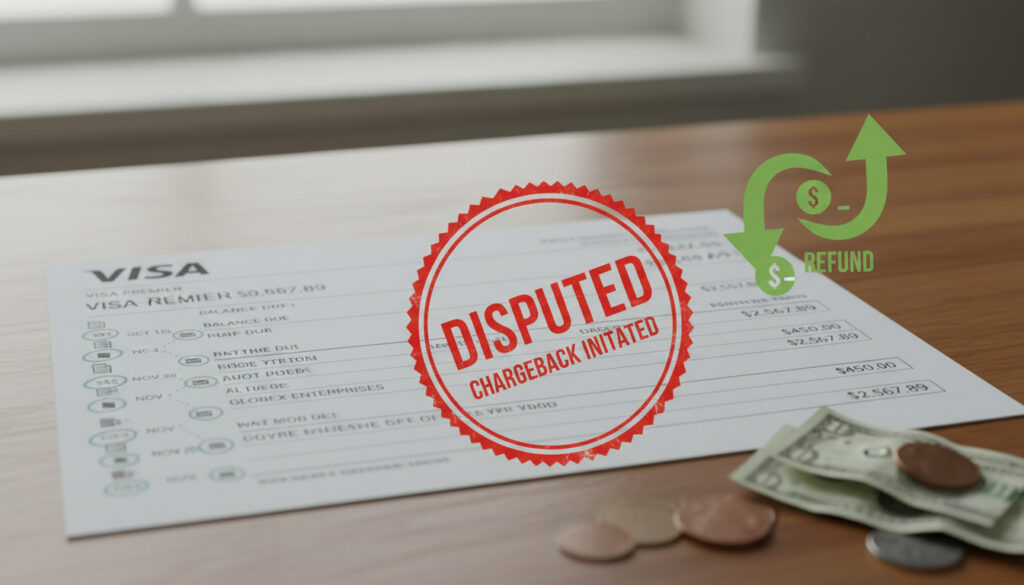
What Is a Chargeback – Process, Timelines and Impacts
A chargeback represents a forced reversal of a credit or debit card transaction, triggered when a cardholder disputes a charge through their issuing bank. Unlike merchant-initiated refunds, this process bypasses the seller entirely, drawing funds directly from the merchant’s account while the claim undergoes investigation.
Originally designed to protect consumers from fraud and billing errors, chargebacks have evolved into a complex financial mechanism that impacts billions in commerce annually. While cardholders gain powerful recourse against unauthorized transactions, merchants often face significant fees and operational burdens even when disputes lack merit.
What Is a Chargeback?
- Chargebacks protect consumers but create significant financial burden for merchants
- Average resolution spans 45 to 90 days depending on complexity
- Fraudulent chargeback rates have escalated alongside e-commerce growth
- Major networks enforce strict evidence requirements with specific reason codes
- Merchants typically face fees ranging from $15 to $100 per dispute
- Provisional credits are issued to consumers before merchant response
- Reversal success rates for merchants hover around 30 to 40 percent
| Consumer Filing Window | 60–120 days from statement date |
| Merchant Response Deadline | 20–45 days from notification |
| Merchant Fee Range | $15–$100 per chargeback |
| Merchant Win Rate | Approximately 30–40% |
| Full Process Duration | 45–90 days typical; arbitration adds 30–60 days |
| Major Networks | Visa, Mastercard, American Express |
| Provisional Credit | Issued immediately upon dispute filing |
| Arbitration Fee | Network-imposed; loser pays structure |
How Does the Chargeback Process Work?
The chargeback lifecycle involves multiple financial institutions operating under card network regulations. When a cardholder identifies an unauthorized or problematic transaction, they contact their issuing bank rather than the merchant, triggering a formal dispute protocol that withdraws funds from the seller’s account pending investigation.
How Does a Customer Initiate a Dispute?
Cardholders may file disputes through phone calls, mobile banking applications, or online portals. Common triggers include unrecognized charges, non-delivery of goods, defective products, or genuine fraud involving compromised card details. Chargeflow notes that some consumers inadvertently commit “friendly fraud” by forgetting legitimate purchases.
What Happens During Bank Review?
The issuing bank validates the claim and assigns a specific reason code categorizing the dispute type. The bank then issues provisional credit to the cardholder and notifies the merchant’s acquiring bank via the card network. According to Ethoca, the merchant’s account is debited for the transaction amount plus additional fees during this phase.
Merchants typically have 20 to 45 days to submit evidence rebutting the dispute, depending on the card network. Visa allows approximately 30 days, while Mastercard permits around 45 days for the initial response cycle.
How Do Merchants Respond to Chargebacks?
Sellers must decide whether to accept the loss or contest the dispute through representment. This process requires submitting compelling evidence such as delivery confirmations, IP logs, or transaction receipts. Chargeback Gurus emphasizes that merchants who fail to meet documentation standards face automatic losses.
Chargeback vs. Refund: What’s the Difference?
While both mechanisms return funds to consumers, they operate through entirely different pathways with distinct implications for merchants and buyers.
Who Controls the Process?
Chargebacks bypass merchant control entirely, proceeding through banking networks after the cardholder contacts their issuer. Refunds remain merchant-initiated, involving direct communication between seller and buyer without bank intermediation. As industry documentation clarifies, chargebacks impose additional fees and complexity absent in standard refund transactions.
What Are the Cost Implications?
Merchants incur chargeback fees ranging from $15 to $100 regardless of dispute outcome, whereas refunds cost only the transaction amount. High chargeback ratios—typically exceeding 1 percent of sales—can damage merchant relationships with acquiring banks.
How Quickly Are Funds Returned?
Chargebacks provide provisional credit within days but require 45 to 90 days for final resolution. Refunds typically process immediately once initiated by the merchant.
How Long Do You Have to File a Chargeback?
Card networks enforce strict statutes of limitations for dispute initiation, though specific timeframes vary significantly between issuers and claim types. Understanding these deadlines remains essential for high-value transactions, whether involving digital services or significant purchases like those researched through Houses for Sale Barnsley.
Consumers generally retain 60 to 120 days from the statement date to file initial disputes. Mastercard guidelines permit up to 540 days for certain dispute categories, while Visa mandates a 120-day window for most transactions. American Express timeframes vary according to specific reason codes.
Certain Mastercard disputes involving specific merchant category codes or delayed delivery items permit filing up to 540 days from the transaction date, significantly extending beyond standard windows.
Merchants face compressed timelines of 20 to 45 days to submit evidence, with Visa typically allowing 30 days and Mastercard permitting approximately 45 days for initial responses.
What Is the Chargeback Process Timeline?
The chronological progression from dispute initiation to final resolution involves distinct phases governed by network regulations.
- Customer Initiates Dispute: Cardholder contacts issuing bank via phone, app, or online portal regarding unauthorized or unsatisfactory charges.
- Bank Review and Provisional Credit: Issuer validates claim, assigns reason code, credits customer temporarily, and notifies merchant’s acquirer.
- Merchant Account Debited: Acquiring bank withdraws transaction funds plus chargeback fee from seller’s account.
- Merchant Representment: Seller submits evidence (receipts, delivery proof, IP logs) rebutting the claim within network-specific deadlines.
- Bank Review of Evidence: Issuer evaluates merchant submission; accepts to reverse chargeback or rejects to advance process.
- Pre-Arbitration or Arbitration: Unresolved disputes escalate to card network arbitration where final decisions are rendered without further appeal.
According to Redbridge Data & Analytics, the complete cycle typically spans 45 to 90 days, with arbitration extending timelines by an additional 30 to 60 days.
Does a Chargeback Affect Your Credit Score?
The credit implications of chargeback activity differ markedly between consumers initiating disputes and merchants receiving them.
Established Information
- Consumer credit scores remain unaffected by dispute filing or successful chargeback completion
- Corrected statements via chargeback may improve credit utilization ratios
- Merchants face indirect credit impacts when high chargeback ratios deteriorate banking relationships
- Industry data confirms approximately 30 to 40 percent merchant win rates in representment
Remaining Uncertainties
- Exact chargeback ratio thresholds triggering merchant account termination vary by acquirer
- Specific credit bureau treatment of merchant account restrictions remains undisclosed
- Long-term consumer credit impacts of frequent dispute filing are not comprehensively studied
- Arbitration fee amounts fluctuate by network and dispute complexity without standardized disclosure
Square’s financial guidance confirms that consumer credit scores face minimal direct impact from the chargeback mechanism itself.
Why Do Chargebacks Exist?
Chargeback mechanisms emerged from consumer protection legislation, specifically Regulation E of the Electronic Fund Transfer Act, which mandates error resolution procedures for electronic payments. These safeguards were designed to encourage consumer confidence in credit and debit card systems by providing recourse against fraud and merchant malfeasance.
The proliferation of e-commerce has transformed chargebacks from rare protective measures into routine business hazards. Signifyd notes that the anonymity of online transactions has elevated fraud rates, forcing merchants to implement sophisticated verification systems while maintaining the consumer protections that chargebacks guarantee.
Modern card networks including Visa and Mastercard have established elaborate rulebooks balancing consumer rights against merchant protections, though critics argue the burden of proof remains disproportionately weighted against sellers in initial dispute phases.
What Do Industry Sources Say About Chargebacks?
Major card networks and fraud prevention specialists have documented the operational realities of dispute resolution, emphasizing both consumer protection mandates and merchant challenges.
Chargebacks ensure consumer protection while maintaining payment system integrity through standardized dispute resolution frameworks.
— Mastercard Chargeback Guidelines
Documentation from Ethoca emphasizes that merchants who maintain detailed transaction records and respond promptly to retrieval requests achieve significantly higher success rates in dispute resolution.
Merchants face a ‘guilty until proven innocent’ paradigm where funds are withdrawn before evidence review, creating cash flow challenges even for legitimate businesses.
— Industry Analysis, Kount Fraud Prevention
What Should You Know About Chargebacks?
Chargebacks serve as essential consumer safeguards against fraud and merchant error, yet their mechanics create asymmetrical burdens where merchants absorb costs and administrative overhead regardless of dispute validity. Understanding network-specific timeframes, maintaining meticulous transaction documentation, and considering alternatives like Travel Insurance Compare the Market for disputed travel purchases can help both parties navigate these complex financial instruments effectively.
Frequently Asked Questions
What is chargeback fraud?
Chargeback fraud occurs when cardholders dispute legitimate transactions to obtain free goods or services, or when criminals use stolen cards to purchase items before initiating disputes.
How do merchants handle chargebacks?
Merchants either accept chargebacks absorbing the loss and fees, or contest them through representment by submitting evidence like delivery confirmations and transaction logs within strict deadlines.
Can a chargeback be reversed?
Yes, merchants can reverse chargebacks by winning the representment phase with compelling evidence, though success rates typically range only 30 to 40 percent according to industry data.
What are common reasons for chargebacks?
Common triggers include unauthorized transactions, non-delivery of merchandise, defective goods, billing errors, and “friendly fraud” where cardholders forget legitimate purchases.
Does a chargeback hurt your credit?
Filing a chargeback does not negatively impact consumer credit scores; successful disputes may improve scores by correcting statement errors. Merchants face indirect credit impacts through banking relationship strain.
Impact of chargebacks on sellers?
Sellers lose revenue from the original transaction plus incur non-refundable fees ranging $15–$100. High chargeback ratios can lead to increased processing rates or merchant account termination.
How long does a chargeback take?
The complete process typically requires 45 to 90 days from initial filing to resolution, with arbitration cases extending an additional 30 to 60 days depending on network complexity.
More related posts
 Cindy Sherman: Biography, Art, Net Worth, and Most Famous Photos
 Canon R6 Mark III: Specs, Price, Release Date & Review (2026)
 When Do Clocks Go Forward 2025? 30 March Ireland
 Exeter City F.C. – History, Stadium and League One Status
 The Rest Is Politics Live – 2025 UK Tour Dates and Tickets
 Barcelona vs Atlético Madrid – Preview, Lineups, Predictions
 Go Ahead Eagles Standings: Eredivisie Table & Results
 Cheapest Fuel Near Me: Ireland’s Live Petrol & Diesel Prices
