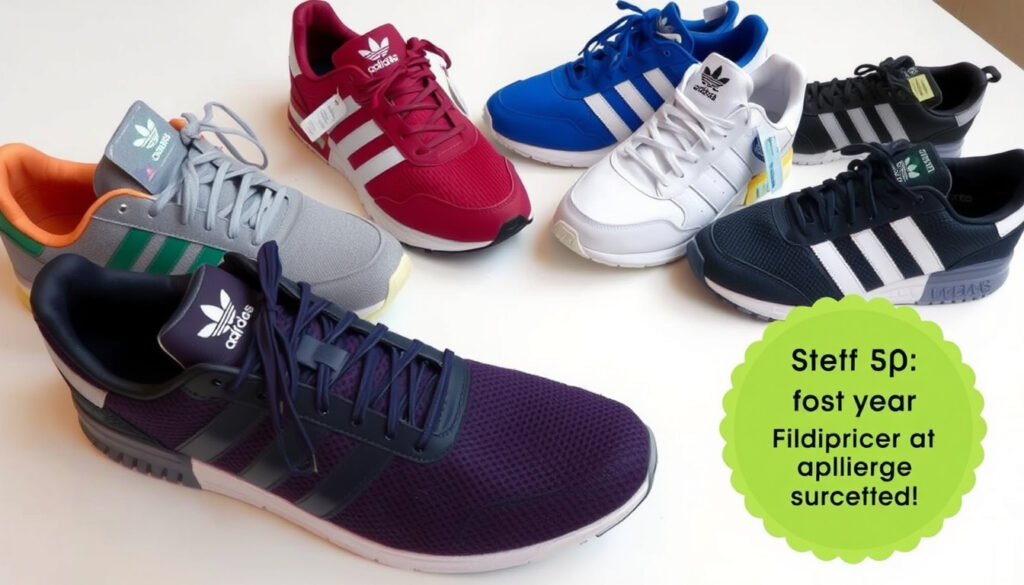
Adidas Shoes: Trends, Prices, Comfort & Replacement Guide
Anyone who has shopped for trainers in the UK this year has noticed the same three names everywhere: Samba, Gazelle and Spezial. They are the retro Adidas trio at the centre of UK style comparisons, yet each one fits, cushions and costs differently. Woman & Home’s head-to-head found the Handball Spezial is the strongest of the three for all-day wear, while the Samba is the sharper, thinner-soled style. By the end, the right pair for your feet — and the right moment to replace it — should be obvious.
Founded: 1949 by Adolf Dassler (Gear Patrol) ·
Headquarters: Herzogenaurach, Germany ·
UK shoe page: adidas.co.uk/shoes ·
UK outlet page: adidas.co.uk/shoes-outlet ·
Retro models named by UK retailers: Samba, Gazelle and Spezial
Quick snapshot
- The Handball Spezial arrived in 1979 as an indoor handball shoe (Gear Patrol).
- The Gazelle’s design heritage is a suede upper and a low rubber cupsole (Real Men Real Style).
- Some Gazelle variants are described by Adidas UK as snug, with soft uppers and springy cushioning (Adidas UK).
- Which single model is “the one everyone is wearing” can’t be proven: no UK page in the source set publishes a sales chart.
- Whether Adidas is losing popularity is not something storefront pages can confirm.
- The “top 5 most expensive shoes” and “billionaire shoes” questions have no authoritative answer in the reviewed sources.
- The trio at the centre of the trend dates from 1950, 1966 and 1979 (Gear Patrol; Sneakerjagers).
- The Spezial carried UK terrace-culture weight through the 1980s (Sneakerjagers).
- All three are still sold as lifestyle styles rather than as performance kit for their original sports. (Gear Patrol)
- Check the official outlet page before paying full price (Adidas UK).
- Typical retro prices sit around £85–£100, with premium editions costing more (Woman & Home).
- If comfort is the priority, the Spezial’s thicker sole is the reason to choose it (Woman & Home).
Seven facts anchor everything below: the brand’s origin, the official pages that matter, and the launch years of the models in question.
| Fact | Value |
|---|---|
| Founded | 1949, by Adolf Dassler, in Herzogenaurach, Germany |
| Official UK shoes page | adidas.co.uk/shoes |
| Official UK outlet page | adidas.co.uk/shoes-outlet |
| Samba launch year | 1950 |
| Gazelle launch year | 1966 |
| Handball Spezial launch year | 1979 |
| Gazelle construction heritage | Suede upper, low rubber cupsole |
Named sources: Gear Patrol · Sneakerjagers · Real Men Real Style · Adidas UK
What are the trending Adidas trainers?
Start with the evidence base. Across the UK pages in the source set, the retro styles doing the heavy lifting are the Samba, the Gazelle and the Handball Spezial — the three models Woman & Home puts head-to-head as the current icons (Woman & Home). They share a football-adjacent history, but their fits, soles and prices are not the same.
What are the Adidas shoes everyone is wearing right now?
- Samba — the football-born model with the thinnest sole and leanest cushioning of the trio (Woman & Home).
- Gazelle — the 1966 trainer with a suede-upper heritage and a low rubber cupsole (Sneakerjagers; Real Men Real Style).
- Handball Spezial — born as an indoor handball shoe and turned into a British terrace staple through the 1980s (Sneakerjagers).
No UK retailer in the source set publishes a “most worn” chart, so “everyone is wearing these” is really a shelf-and-search signal. The clearest evidence is that these three keep appearing as the Adidas set worth comparing, and the comparison keeps producing the same comfort verdict: Spezial first, Samba last, Gazelle between them (Woman & Home).
What are the Adidas Shoes Spezial and Sambas?
The Samba and Spezial are heritage products with different original jobs — football and handball — and that difference still shows up in how they feel on the street.
The Samba and Spezial bracket the trio. The Samba was reshaped over time into the low-profile silhouette people recognise today (Gear Patrol), while the Spezial carries the thickest sole and a more cushioned footbed (Woman & Home). The Gazelle sits in the middle: a suede trainer with a low rubber cupsole and a snug fit (Real Men Real Style; Adidas UK).
Why is Adidas so expensive now?
Part of the answer is on the official listing for the Gazelle. The same UK page showed a standard colourway at £110 and a Gazelle SPZL F.C. version at £85 (Adidas UK). That £25 gap inside one product line is the first clue: “Adidas” is not one price, it is a ladder of model tiers, materials and editions.
Woman & Home’s comparison puts typical prices for the retro trio at roughly £85–£100 and notes that premium materials and limited editions push higher (Woman & Home). So the “expensive” label usually means you are looking at a premium tier, a hyped colourway, or full retail instead of a sale.
What are the top 5 most expensive shoes?
- No official UK page in the source set publishes a “top 5 most expensive Adidas” ranking — the list lives in search queries, not storefronts.
- The price spread we can verify runs through the official Originals page, where Gazelle products appear at £90 and £130 (Adidas UK).
- Premium editions and collabs are the usual reason a pair climbs above the £85–£100 typical band (Woman & Home).
“Expensive” is a tier problem, not a brand problem. Compare the £110 standard Gazelle with the £85 SPZL edition before deciding Adidas has left your budget.
The implication: the price question is really a tier question. Ask which model and which edition, and the “why so expensive” mystery mostly disappears.
Where can I buy cheap Adidas shoes?
The shortest answer is the official outlet page: it exists specifically to sell Adidas shoes at reduced prices, and it is the first place to check before any full-price checkout (Adidas UK). The second answer is timing — sale periods, less-hyped colourways and standard editions beat full-price launches almost every time.
“Cheap” is relative to the £85–£100 typical band for the trio (Woman & Home). A pair below that band is a sale find; a pair far above it is usually collecting a reissue premium.
Which UK retailer pages should I check for Adidas sale shoes?
- Official Adidas outlet page — dedicated sale stock.
- Official Adidas shoes page — the full men’s, women’s and kids’ range to compare against.
- Sports chains and high-street retailers — useful for price matching, though delivery thresholds and student discounts change the final cost.
If you prefer checking a physical store before ordering, our Sports Direct Near Me guide covers Ireland locations, stock checks and prices: Sports Direct Near Me: Ireland Store Finder, Stock Check & Prices.
The implication: cheap Adidas shoes exist, but they are found by comparing channels, not by hoping for a brand-wide discount.
Is Adidas losing popularity?
The pages in the source set do not include a popularity ranking, so a confident yes or no would be guesswork. What the retail data does show is persistence: the retro trio from the 1950s, 1960s and 1970s is still the set the UK press compares and retailers keep stacking (Woman & Home).
Culture explains part of that persistence. The Handball Spezial’s path from indoor handball shoe to 1980s terrace icon gave the line a social history that newer designs cannot fake (Sneakerjagers).
What shoes do billionaires wear?
Billionaire-shoe lists are search-bait, not data. No source in the set documents what billionaires actually wear, so treat the question as a curiosity, not a buying signal.
The useful version of the question is about status pricing: limited editions and premium materials are where Adidas climbs above the typical band (Woman & Home).
What this means: popularity is better measured by shelf space than by headlines, and the shelf still belongs to the retro trio.
What is the No. 1 shoe brand?
No authoritative “No. 1 shoe brand” appears anywhere in the source set, and the honest answer is that the top spot changes with the metric.
- Revenue, units sold and consumer preference each produce a different winner.
- None of the official pages in the source set claims a category top spot.
What the sources do show is range: the official Adidas shoes page sells men’s, women’s and kids’ footwear across many categories (Adidas UK). That breadth explains why the brand stays in the conversation, but it does not settle a category ranking.
The pattern: “No. 1” is a marketing trophy, not a measurement. The question that matters for your wallet is which model fits your foot, not which brand owns a headline.
Which shoe brand is the most comfortable?
Comfort is a fit question before it is a brand question: foot shape, arch, activity, cushioning and sizing matter more than the logo. On the retro trio, the differences are concrete (Woman & Home).
Woman & Home’s head-to-head found the Samba has the thinnest sole and least cushioning, the Gazelle has a slightly thicker sole, and the Handball Spezial has the thickest sole with a more cushioned footbed (Woman & Home).
What shoes do most podiatrists recommend?
- The source set contains no podiatrist endorsement for any specific Adidas model, and we will not invent one.
- Arch support and midsole firmness depend on your foot mechanics, so a retailer page cannot answer a medical question.
What the official listing does state for some Gazelle variants is a snug fit, soft uppers, springy cushioning and a low-level rubber cupsole (Adidas UK). That is a construction description, not medical advice.
What are the best shoes for all-day walking?
- Handball Spezial — strongest of the three for all-day wear, thanks to the thicker sole and cushioned footbed (Woman & Home).
- Gazelle — the middle option, with more cushioning than the Samba (Woman & Home).
- Samba — the sharpest look and the least forgiving underfoot (Woman & Home).
The trade-off: the shoe that looks best at 8am is rarely the one that feels best at 6pm. For walking-heavy days, the Spezial’s cushioning wins.
How often should shoes be replaced?
Replacement runs on wear, not on the calendar. Mileage, midsole compression, outsole wear and foot fatigue decide when a pair is done — and the retro trio ages at different speeds because their soles differ (Woman & Home: the Samba’s thinner sole leaves less cushioning to lose).
What signs show an Adidas shoe is worn out?
- Outsole wear — when the tread looks smooth or uneven, grip has dropped.
- Midsole compression — a thin-soled Samba goes flat sooner than a thicker-soled Spezial (Woman & Home).
- Upper damage — a suede Gazelle shows scuffs and stretched stitching early (Real Men Real Style).
- Recurring foot pain — if a pair that used to be comfortable now leaves you sore, that is the clearest replacement signal.
The practical rule: ignore the “replace every X months” advice and watch the shoe. Rotate pairs, check the outsole, and retire the pair when the support underfoot goes flat or your feet start complaining.
The consequence: shoes are replaced by feel, not by season — and the thinner the sole, the sooner that moment arrives.
Samba vs Gazelle vs Spezial: the head-to-head
Three retro models, one pattern: the newest of the trio is the one UK reviewers rank highest for daily comfort.
| Trait | Samba | Gazelle | Handball Spezial |
|---|---|---|---|
| Debut | 1950 | 1966 | 1979 |
| Original purpose | Football shoe for hard or frozen ground | Suede-upper trainer with low rubber cupsole | Indoor handball shoe |
| Sole profile | Thinnest of the three | Thicker than the Samba | Thickest, with a more cushioned footbed |
| Fit notes | Almond-shaped toe, narrower | Snug fit | Wider than the Samba |
| All-day wear | Least cushioning | Middle ground | Strongest of the three |
| UK price signals | From about £95 | £90–£130 across official listings | £85–£100 typical band |
Named sources: Gear Patrol · Sneakerjagers · Real Men Real Style · Adidas UK · Woman & Home
Construction and comfort specs
If you walk all day, buy the Spezial; if you want the sharpest silhouette, buy the Samba. The Gazelle is the compromise that looks right and feels better than the Samba underfoot.
Eight facts that should survive contact with a salesperson:
| Spec | Detail |
|---|---|
| Samba origin | 1950 football shoe for hard or frozen ground |
| Gazelle origin | 1966 trainer with suede upper and low rubber cupsole |
| Spezial origin | 1979 indoor handball shoe |
| Samba fit and sole | Almond-shaped toe, narrower, thinnest sole |
| Gazelle fit | Snug fit, soft uppers, springy cushioning |
| Spezial cushioning | Thickest sole, more cushioned footbed |
| All-day ranking | Spezial first, Gazelle second, Samba third |
| Typical UK price | £85–£100, with premium editions higher |
Named sources: Gear Patrol · Sneakerjagers · Real Men Real Style · Adidas UK · Woman & Home
Adidas retro timeline: from 1949 to the UK shelf today
- — Adidas is founded by Adolf Dassler in Herzogenaurach, Germany.
- — The Samba debuts as a football shoe designed for traction on hard or frozen ground.
- — The Gazelle arrives, with early red and blue versions linked to different sporting uses.
- — The Handball Spezial is released as an indoor handball shoe.
- — The Spezial becomes part of UK football-casual and terrace culture.
- — The trio still anchors the retro conversation, and UK press comparisons keep the set together.
Named sources: Gear Patrol · Sneakerjagers · Woman & Home
Confirmed facts and open questions
Confirmed facts
- The Samba, Gazelle and Spezial began as 20th-century sports shoes — football, training and handball respectively (Gear Patrol; Sneakerjagers; Real Men Real Style).
- Woman & Home ranks the Spezial the strongest of the three for all-day wear (Woman & Home).
- Adidas UK runs an official shoes page and a dedicated outlet page (Adidas UK).
- The official Gazelle listing shows a snug fit, soft uppers, springy cushioning and prices from £85 to £110 (Adidas UK).
What’s unclear
- Which single model is “the one everyone is wearing” has no published sales chart in the UK pages reviewed.
- Whether Adidas is gaining or losing share cannot be read from storefront pages.
- The most-expensive-Adidas and billionaire-shoe lists have no authoritative source in this set.
- Podiatrist recommendations for Adidas specifically are absent from the supplied sources.
What the sources actually say
“The Samba originated as a football shoe designed for traction on hard or frozen surfaces and debuted in 1950.”
Gear Patrol (sneaker and style history outlet)
“The Handball Spezial has a more cushioned footbed and thicker sole than the Gazelle and Samba, making it the strongest option of the three for all-day wear.”
Woman & Home (UK fashion and lifestyle magazine)
“The Spezial later became strongly associated with UK football-casual and terrace culture during the 1980s.”
Sneakerjagers (sneaker culture publication)
“Some Gazelle variants offer a snug fit, soft uppers, springy cushioning and a low-level rubber cupsole.”
Adidas UK (official product listing)
So which Adidas shoes should you buy?
The retro trio shares a family name but not a footbed. The Spezial wins on cushioning, the Samba wins on silhouette, and the Gazelle splits the difference. The official pages confirm the pricing spread, and Woman & Home’s comparison settles the comfort order: Spezial, then Gazelle, then Samba. For UK shoppers, the buying decision is clear: choose the Spezial for all-day comfort or the Samba for the sharpest retro line — or check the official outlet first and keep the difference for the next reissue.
Frequently asked questions
Do Adidas Samba, Gazelle and Spezial fit the same way?
Not exactly. Woman & Home describes the Samba as narrower with an almond-shaped toe (Woman & Home), while Adidas UK describes some Gazelle variants as snug fitting (Adidas UK). If you are between sizes, Size 43 in UK: Men’s and Women’s Shoe Size Conversion helps before you order.
Which of the three retro Adidas shoes has the best cushioning?
The Handball Spezial. Woman & Home’s comparison found its thicker sole and more cushioned footbed make it the strongest of the three for all-day wear (Woman & Home).
How much do Samba, Gazelle and Spezial cost in the UK?
Typical prices sit around £85–£100, with premium materials and limited editions costing more (Woman & Home). Adidas UK’s listing showed a standard Gazelle at £110 and a Gazelle SPZL F.C. at £85 (Adidas UK).
Can I run in Adidas Sambas?
The Samba started as a football shoe and the Spezial as an indoor handball shoe (Gear Patrol), but current reissues are lifestyle styles rather than running shoes. For running, look at the modern range on the official Adidas shoes page.
Why do Samba, Gazelle and Spezial carry terrace-culture cachet?
The Handball Spezial became tied to UK football-casual and terrace culture in the 1980s, according to Sneakerjagers (Sneakerjagers), and that cultural history now anchors the whole retro line.
Where can I find discounted Adidas shoes?
The official UK outlet page is built for sale stock. Given typical retro prices of £85–£100, sale timing, colourway and edition make the real difference.
More related posts
 Best Toddler Car Seats – Top Safety Picks for 2025
 Translate English to Hindi: Free Tools, Voice & Camera Guide
 Where to Watch England vs India Cricket Live in 2025
 Mick McCarthy: Profile, Career, Net Worth, and Managerial Record
 Choi Hyun-wook Controversy: Career, Scandal & Facts
 Nicholas Ralph: Accent, Partner, and TV Role
 Summer Fridays Lip Balm – Review, Shades and Hydration Guide
 Very Bad Credit Loans Direct Lenders – Guide to Top Options
