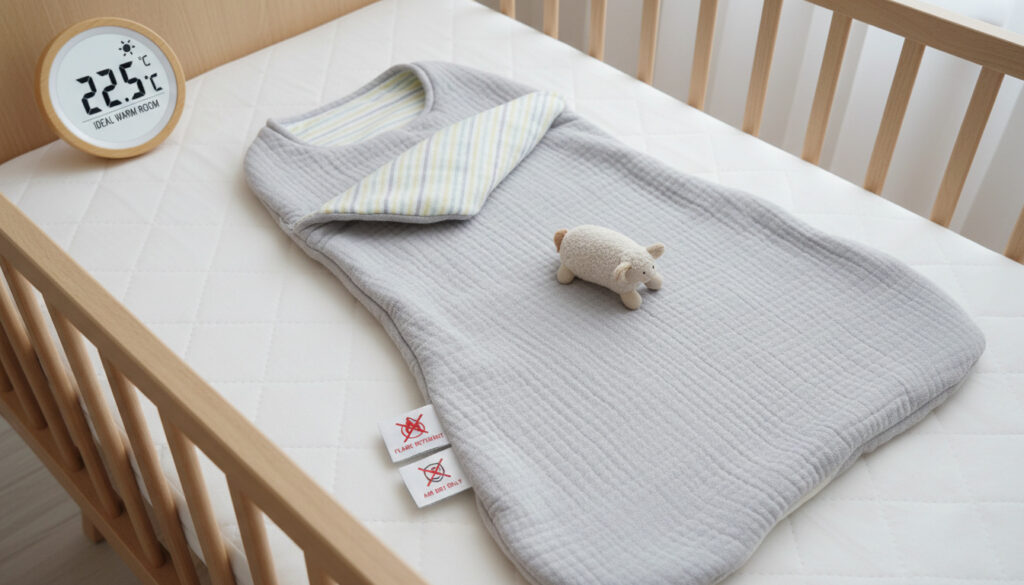
0.5 Tog Sleeping Bag – Safety and Temperature Guide
A 0.5 TOG sleeping bag provides the lightest thermal insulation available in infant sleepwear, specifically engineered for warm nursery environments above 24°C. This rating represents minimal fabric density, utilizing single-layer cotton or bamboo constructions that prioritize breathability over heat retention during summer months or in heated indoor spaces.
Safety organizations emphasize that lightweight sleep sacks reduce Sudden Infant Death Syndrome (SIDS) risks associated with loose bedding and overheating. The 0.5 TOG standard has emerged as the definitive choice for newborns in tropical climates or British heatwaves, replacing traditional blankets with hip-healthy designs that allow natural movement while maintaining consistent coverage.
Selecting the appropriate thermal grade requires precise room temperature monitoring rather than seasonal guessing, as infant thermoregulation differs significantly from adult perception. Parents must understand the standardized measurement system to navigate the transition between summer weight and winter weight options effectively.
What Is a 0.5 Tog Sleeping Bag?
Optimal for environments above 75°F where standard sleep sacks cause sweating
Prevents heat accumulation during peak summer months or for very young infants
Single-layer construction maximizes airflow compared to quilted alternatives
Allows natural leg positioning recommended by pediatric orthopedic guidelines
- Lullaby Trust alignment: Safety consensus recommends 0.5-1.0 TOG ratings for nursery temperatures exceeding 20°C to prevent overheating
- SIDS risk reduction: HALO research indicates wearable blankets eliminate loose bedding hazards while maintaining safe thermal zones
- Standardized measurement: Ratings comply with BS EN 16890 regulations for infant sleep products
- Age versatility: Most manufacturers size 0.5 TOG options from birth through six months with adjustable shoulder snaps
- Insulation differential: Provides approximately 50% less thermal retention than 1.0 TOG alternatives
- Layering specificity: Designed for use with minimal undergarments—typically diaper-only or short-sleeve bodysuits
- Seasonal restriction: Unsafe for winter use below 20°C without significant clothing augmentation
| Aspect | 0.5 TOG Specifications |
|---|---|
| Room Temperature Range | 24-27°C (75-81°F) |
| Age Suitability | Newborn to 6 months (0-6kg) |
| Fabric Construction | Single layer, unlined |
| Primary Materials | 100% cotton, bamboo jersey, silk blends |
| Safety Certifications | Hip-healthy design, International Down and Feather Testing Laboratory standards |
| Seasonal Application | Summer, heatwaves, tropical climates |
| Undergarment Requirements | Diaper only or short-sleeve bodysuit |
| TOG Scale Position | Lowest standard rating (0.2-0.6 variants exist) |
What Temperature Is Suitable for a 0.5 Tog Sleeping Bag?
Love to Dream guidelines establish 75°F (24°C) as the minimum threshold for 0.5 TOG deployment, with some manufacturers extending suitability to 81°F (27°C) depending on undergarment selection. This narrow thermal window requires precise environmental control, as deviations below 22°C render the insulation insufficient for maintaining safe infant body temperature.
Room Temperature Monitoring Protocols
Nursery thermometers positioned at cot height provide accurate readings, eliminating the guesswork associated with wall-mounted HVAC sensors. ergoPouch recommendations suggest verifying measurements during the night, as evening ambient temperatures often drop significantly from afternoon peaks, potentially necessitating clothing adjustments within the same TOG rating.
Place a digital thermometer within one meter of the sleeping surface for 30 minutes before bedtime. Gunamuna specifications note that 0.5 TOG remains effective up to 78°F (26°C), but individual infant metabolism varies—monitor for sweating or cold extremities regardless of thermometer readings.
Seasonal Transition Indicators
British summer months typically warrant 0.5 TOG usage from June through August, though September heatwaves may extend requirements. Parents should transition to 1.0 TOG ratings when consistent nighttime temperatures fall below 22°C, usually corresponding with autumn heating activation.
Is a 0.5 Tog Sleeping Bag Safe for Babies?
Safety data positions 0.5 TOG sacks as preferable to traditional blankets, which pose entanglement and suffocation hazards. The lightweight construction specifically addresses overheating concerns, a documented SIDS risk factor, by allowing heat dissipation rather than accumulation.
Overheating Prevention Mechanisms
Sleep of Mind research indicates that breathable 0.5 TOG bags reduce core temperature elevation compared to 2.5 TOG alternatives in warm rooms. Parents should observe for flushed cheeks, rapid breathing, or damp hair—signs of excessive warmth requiring immediate clothing reduction or TOG downgrade.
Never augment a 0.5 TOG bag with additional blankets or quilts. Happiest Baby guidelines confirm that layering blankets over any sleep sack negates the breathable design and reintroduces suffocation risks. Adjust warmth solely through undergarment selection—long-sleeve bodysuits for cooler ends of the 24°C range, diaper-only for temperatures above 26°C.
Material Breathability Standards
Natural fibers dominate 0.5 TOG construction, with cotton and bamboo jersey permitting air circulation that synthetic fills restrict. Silk blends appear in premium options, offering moisture-wicking properties that maintain dry skin contact during humid nights.
Best 0.5 Tog Sleeping Bags: Top Recommendations
Market options vary by closure type, sleeve length, and fabric origin, with British and Australian brands leading thermal rating standardization. Selection prioritizes TOG accuracy certification and hip-healthy design labels over aesthetic considerations.
Newborn Sizing Specifications
Standard 0.5 TOG bags accommodate 0-6 month age ranges, typically fitting infants up to 8kg with bottom-weighted hems that prevent ride-up. Nest Designs offers footed varieties for mobile infants, while traditional sack shapes suit pre-mobile newborns.
Measure from shoulder to toe when selecting between short-sleeve and sleeveless options. Garments should allow the baby to straighten legs fully without tension at the neck or armholes, with arm openings positioned below the shoulder joint to prevent fabric bunching near the face. For more information on this topic, please visit Dr Althea 345 Relief Cream.
Leading Brand Comparison
HALO SleepSack provides 100% cotton wearable blankets with reverse zipper systems for easy diaper changes in 0.5 TOG ratings. Cuddle Sprout charts verify Love to Dream’s 0.2-1.0 range accommodates warmer rooms than competitors, while Slumbersac specializes in unlined summer options specifically for 24°C+ environments.
Gunamuna emphasizes breathability for 74-78°F ranges with organic fabric options, whereas ergoPouch provides detailed what-to-wear guides correlating room temperatures with specific undergarment combinations. Bamboo jersey options from Nest Designs target 75-81°F with footed constructions for early walkers.
0.5 Tog vs Other Ratings: Key Differences
The TOG scale spans 0.2 to 4.0, with each increment representing substantially different thermal retention capabilities. A 0.5 rating provides one-fifth the insulation of standard 2.5 TOG winter bags, necessitating completely different clothing strategies and environmental controls.
1.0 TOG bags suit transitional seasons (20-24°C), offering double the warmth of 0.5 versions without the bulk of winter ratings. The 0.5 option specifically excludes fleece or quilted linings present in higher ratings, relying instead on single-layer weaving techniques that maximize air permeability.
Parents maintaining consistent 16-20°C nurseries require 2.5 TOG sacks with long-sleeve pajama layering, making 0.5 TOG inappropriate for these cooler environments except during exceptional heatwaves. The 3.5 TOG extreme winter rating finds no overlap with 0.5 usage scenarios, targeting unheated spaces below 16°C.
When Should You Introduce a 0.5 Tog Sleeping Bag?
- : Initial deployment during warm hospital discharge or summer births, sized 0-6 months with diaper-only layering
- : Peak seasonal usage correlating with British heatwaves, requiring short-sleeve bodysuit adjustments only on cooler nights
- : Gradual shift to 1.0 TOG as ambient temperatures consistently fall below 22°C overnight
- : Washing and storage in breathable cotton bags during winter months when 2.5 TOG becomes necessary
- : Reintroduction at 12 months if sizing permits, or replacement with larger 0.5 TOG for 6-18 month age ranges
What Is Established About 0.5 TOG Safety?
| Established Standards | Remaining Uncertainties |
|---|---|
| BS EN 16890 certification ensures standardized TOG accuracy across brands | Individual infant metabolic rates vary; some babies naturally run warmer or cooler than averages |
| 24-27°C room range verified safe for 0.5 TOG with minimal clothing | Optimal humidity levels (%) for 0.5 TOG use not standardized across manufacturers |
| Cotton and bamboo provide superior breathability compared to synthetic alternatives | Exact duration of safe use at upper temperature limits (27°C+) requires further longitudinal study |
| Hip-healthy designs prevent dysplasia compared to tight swaddling | Interaction between 0.5 TOG and medical conditions (fever, prematurity) requires pediatric consultation |
Where Did the TOG Rating System Originate?
The TOG (Thermal Overall Grade) measurement originated within the British textile industry during the 1940s, initially standardizing duvet insulation before adapting to infant sleepwear in the early 2000s. This quantification system replaced vague descriptions like “summer weight” with precise numerical values based on thermal resistance testing through standardized laboratory methods.
International adoption followed British Standards Institution protocols, with the 0.5 rating emerging as the technical minimum for functional sleep sacks—below which fabric provides negligible thermal benefit. The scale reflects European bedding standards adapted for infant safety, where precise environmental control proved more critical than adult bedding flexibility.
Contemporary usage now spans UK, Australian, and North American markets, though terminology varies regionally. British retailers primarily utilize TOG ratings, while American markets sometimes reference “sleep sack weight” categories before converting to TOG terminology for precision.
What Do Safety Organizations Recommend?
Light sleep bags over blankets reduce the risk of SIDS and overheating.
— Consensus alignment with Lullaby Trust and NHS safer sleep guidelines
Check for cold hands and feet (indicating too cool) or rapid breathing and sweating (indicating too hot) regardless of room thermometer readings.
— Sleep of Mind safety protocols
Is a 0.5 Tog Sleeping Bag Right for Your Baby?
Newborns in consistently warm environments above 24°C require the minimal insulation of 0.5 TOG sleeping bags to maintain safe body temperatures without overheating risks. This rating suits British summer months, tropical climates, or heated apartments where heavier options create dangerous thermal accumulation, provided parents verify room temperatures with accurate thermometers and resist the temptation to add blankets. For those considering property investments with climate control capabilities, see Houses for Sale Barnsley – Prices, Best Areas and Buyer Guide or for maintaining optimal nursery environments, check Window Cleaner Near Me – Costs, Tips and Reliable Pros.
Frequently Asked Questions
How do I wash a 0.5 tog sleeping bag?
Machine wash at 30-40°C using gentle cycles suitable for natural fibers like cotton or bamboo. Air drying preserves breathability better than tumble drying, which may compress single-layer fabrics and reduce thermal efficiency.
Can I use a 0.5 tog sleeping bag with air conditioning?
Only if the air conditioning maintains temperatures above 24°C. Cooled environments below 22°C render 0.5 TOG insufficient, requiring transition to 1.0 TOG or heavier layering that may compromise the bag’s hip-healthy fit.
What should my baby wear under a 0.5 tog sleeping bag?
At 24-27°C, use a short-sleeve bodysuit or diaper only. Above 27°C, diaper-only suffices. Below 24°C, transition to long-sleeve bodysuits or switch to higher TOG ratings rather than adding blankets over the sack.
How do I know if my baby is too cold in a 0.5 tog bag?
Cold hands and feet indicate insufficient warmth, as does chest coolness to the touch. However, cold extremities alone may not indicate distress if the core remains warm—check the back of the neck or stomach for accurate temperature assessment.
Are organic cotton options available for 0.5 tog sleeping bags?
Yes, brands like Nest Designs offer organic cotton and bamboo jersey constructions in 0.5 TOG ratings. These maintain the same breathability standards as conventional cotton while meeting organic certification requirements for pesticide-free fabrics.
Can I use a 0.5 tog sleeping bag for a toddler?
Manufacturers typically size 0.5 TOG bags up to 36 months, though toddler-specific designs feature foot holes for walking mobility. Verify weight limits (usually up to 15kg) and ensure the bag allows full leg extension without restricting movement.
More related posts
 Window Cleaner Near Me – Costs, Tips and Reliable Pros
 Bristol City F.C. – History, Achievements and Championship Status
 Best Online Prescription Glasses UK: Top Sites Ranked
 DWP Home Ownership Rules for Pensioners: Key Changes Explained
 Jessie James: Outlaw, TV Personality, Singer – Who Is Who
 Sports Direct Near Me: Ireland Store Finder, Stock Check & Prices
 Love Island Heart Rate Challenge – Rules, Moments and History
 Richard Osman: Health, Marriages, Children & Net Worth
