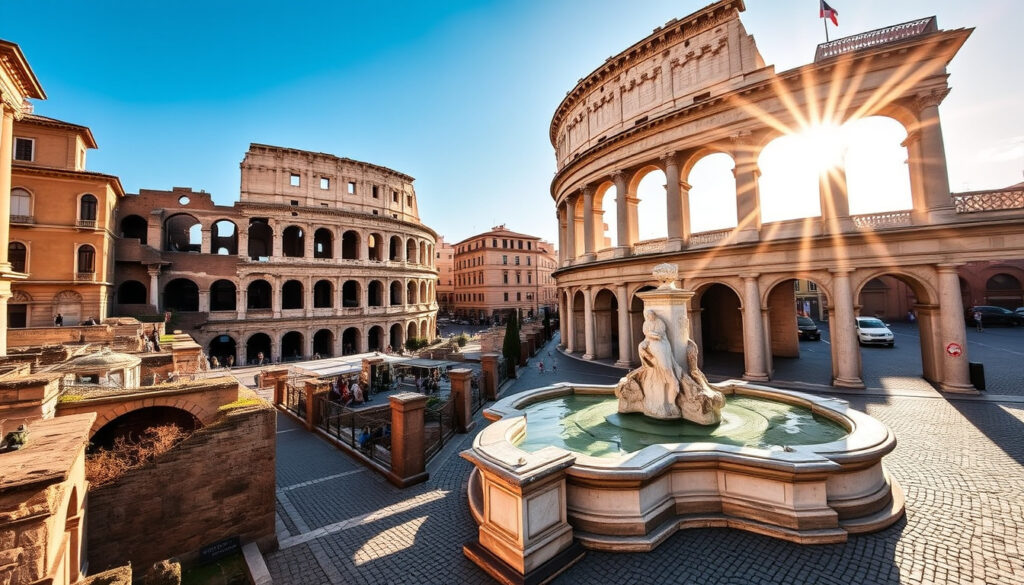
Things to Do in Rome: 3-Day Itinerary & Local Tips
Rome has been pulling travelers for centuries because every cobblestone holds a secret. This practical guide helps you plan a 3-day trip covering must-see sights like the Colosseum and Vatican, while steering you to quieter corners like Trastevere and the Aventine Keyhole, using local know-how to skip lines and crowds.
Annual tourists to Rome: over 10 million ·
UNESCO World Heritage sites in Rome: 2 (Historic Centre, Vatican City) ·
Average daily budget per person (mid-range): $120–$150
Quick snapshot
- Colosseum and Vatican City are top attractions (Go Ask A Local)
- Three days is enough for a first-timer (Go Ask A Local) (Go Ask A Local)
- Exact spending money varies by season and personal habits (She Gets Around)
- Some hidden gems may require extra transport time (Mamma Mia Indeed) (She Gets Around)
- Best months: April–June and September–October (Mamma Mia Indeed)
- Visiting early morning or late afternoon reduces crowds (Go Ask A Local) (Mamma Mia Indeed)
- Book skip-the-line tickets in advance for Colosseum and Vatican (Go Ask A Local)
- Plan a free walking route along Via dei Fori Imperiali (Mamma Mia Indeed)
Four key facts about Rome, one pattern: the city packs incredible density of history and art in a walkable area, making it perfect for a long weekend.
| Label | Value |
|---|---|
| City population | 2.8 million |
| Official language | Italian |
| Currency | Euro (€) |
| Best time to visit | April–June and September–October |
The implication: timing and budget are your main levers—choose shoulder-season dates and you’ll save money and avoid peak crowds.
What can’t you miss in Rome?
What are the top 5 attractions in Rome?
- The Colosseum – open every day until 7:30 pm, tickets €14 at the door without advance reservation (Go Ask A Local)
- The Roman Forum and Palatine Hill – included in Colosseum ticket
- The Pantheon – free to enter (She Gets Around)
- Trevi Fountain – toss a coin to guarantee a return (Mamma Mia Indeed)
- Vatican City – St. Peter’s Basilica, Sistine Chapel, Vatican Museums (€17 entry) (Go Ask A Local)
Bottom line: First-time travelers should prioritize these five. The Colosseum and Vatican require advance booking to avoid 2‑hour queues; the Pantheon and Trevi are free and quick.
You can’t see all five in one day without rushing. Split them across two days to enjoy each site without burnout.
The pattern: Rome’s icons are accessible but crowded. A skip-the-line ticket for the Colosseum costs €16–€20 and saves you an hour of waiting (Go Ask A Local).
Are 3 days enough for Rome?
What to do in Rome in 3 days?
Yes, 3 days is sufficient to cover the major sights with a well-planned itinerary. Here’s a step-by-step plan based on tested routes (Go Ask A Local):
- Day 1: Ancient Rome. Start at the Colosseum (late afternoon to avoid heat), then Roman Forum and Palatine Hill. Lunch in Monti to avoid tourist-trap prices (Go Ask A Local).
- Day 2: Vatican City. Morning at St. Peter’s Basilica, Sistine Chapel, and Vatican Museums (€17 entrance). Afternoon at Castel Sant’Angelo. Borghese Gallery is closed Mondays (Go Ask A Local).
- Day 3: Baroque Rome & Trastevere. Morning at Trevi Fountain and Spanish Steps. Afternoon at Pantheon and Piazza Navona. Evening in Trastevere for authentic Roman atmosphere (Mamma Mia Indeed).
Bottom line: A three‑day itinerary hits all essentials without burnout. Budget travelers: allocate €29.05 for a tight day (She Gets Around). Mid‑range visitors: allow €120–€150 per day.
What this means: three days is the sweet spot for a first-timer. Any less and you skip the quieter gems; any more and you’ll start repeating.
What are the do’s and don’ts in Rome?
Is it rude to not finish your plate in Italy?
- Do dress modestly when entering churches – cover shoulders and knees (Mamma Mia Indeed).
- Do eat in neighborhoods like Monti or Trastevere – prices are lower and quality is higher (Go Ask A Local).
- Don’t eat near major tourist attractions – you’ll pay 30% more for mediocre food (She Gets Around).
- It is considered polite to finish your plate, especially if you are a guest in someone’s home – leaving food can be seen as a critique (Mamma Mia Indeed).
Bottom line: Tourists: church dress code is strict – pack a scarf to cover up. Food wise: order smaller portions if you’re not hungry; it’s better accepted than leaving a full plate.
“Walking is the best low-cost way to see the city.” – Mamma Mia Indeed
The catch: Rome’s social rules are simple but widely ignored by tourists. Following them earns you better treatment from locals.
Is Rome a walkable city?
- Most historic center attractions are within 30 minutes’ walk of each other (Mamma Mia Indeed).
- Use public transport (metro, bus, tram) for longer distances like Vatican or Villa Borghese (Go Ask A Local).
- Comfortable walking shoes are essential due to cobblestone streets (She Gets Around).
Bottom line: Rome is one of Europe’s most walkable capitals. Budget travelers: walking saves €€ and gives you the best street‑level experience.
Why this matters: you don’t need a car or taxi for most of your trip. Public transport is €1.50 per ride with a 100‑minute transfer window.
“A practical 3-day Rome plan combines historic center, Vatican, and Ancient Rome.” – Go Ask A Local
What are some hidden gems in Rome?
- Trastevere neighborhood – authentic Roman atmosphere away from crowds (Mamma Mia Indeed).
- Aventine Keyhole – a unique view of St. Peter’s dome through the keyhole of the Priory of the Knights of Malta (free entry to the square) (Go Ask A Local).
- Centrale Montemartini museum – ancient sculptures in a former power plant; tickets from €8 (Go Ask A Local).
- Protestant Cemetery (Cimitero Acattolico) – a peaceful retreat with graves of Keats and Shelley (Mamma Mia Indeed).
Bottom line: These hidden gems cost little to nothing and offer a break from the crowds. The Aventine Keyhole is best visited early morning to avoid line.
The trade-off: getting to Centrale Montemartini or Protestant Cemetery adds 20–30 minutes of walking or a bus ride. Worth it for the unique experience.
How much spending money do I need for 3 days in Rome?
- Budget travelers: $80–$100/day (hostels, street food, free attractions like Pantheon, Trevi, walking) (She Gets Around).
- Mid-range: $120–$150/day (hotel, sit-down meals, paid attractions – Colosseum €16, Vatican Museums €17, Borghese Gallery €15+€2 booking) (Go Ask A Local).
- Luxury: $250+/day (upscale hotels, fine dining, private tours, maybe a tour guide at the Colosseum) (Mamma Mia Indeed).
Bottom line: A budget traveler can see the same top sights as a luxury traveler, just with more walking and cheaper eats. The biggest variable is accommodation – book early for better rates.
The pattern: spending money boils down to accommodation and restaurant choices. Entrance fees for must‑see attractions are fixed and relatively cheap.
A mid‑range traveler on $130/day spends about $390 for three days. That’s $100 less than a luxury traveler, but you still eat in restaurants and visit every major site.
Upsides
- Compact historic center – walk everywhere
- World‑class attractions within short distances
- Affordable street food and free sites (Pantheon, Trevi, many churches)
- Excellent public transport for longer trips
Downsides
- Crowded at peak hours – queues for Colosseum and Vatican
- Cobblestone streets are tough on feet
- Restaurants near attractions overpriced and medium quality
- Limited nightlife compared to other European capitals
The confirmation: Rome delivers on its promise of history and beauty. The uncertainty: how much you spend depends heavily on your choices around accommodation and dining (She Gets Around). For the budget traveler in Rome, the choice is clear: walk the historic center, eat in Trastevere, and book skip‑the‑line tickets in advance. For the mid‑range visitor, the same advice holds but with the luxury of a sit‑down dinner and a central hotel.
travelingtessie.com, youtube.com, romewise.com, neverendingfootsteps.com
For a comprehensive breakdown of must-see attractions and hidden gems, check out our full Rome travel guide for more detailed local tips and a day-by-day itinerary.
Frequently asked questions
What is the best time of year to visit Rome?
April–June and September–October offer mild weather and smaller crowds. July and August are hot and packed with tourists (Mamma Mia Indeed).
How do I get from Fiumicino Airport to central Rome?
Take the Leonardo Express train (€14, 32 min) or a €48 flat‑rate taxi. A cheaper option: the SIT bus shuttle (€6) (Go Ask A Local).
Is Rome safe for solo travelers?
Yes, Rome is generally safe. Pickpocketing in crowded areas (metro, Colosseum, Trevi) is common – keep valuables secure. Avoid walking alone in dimly lit streets late at night (Mamma Mia Indeed).
What are the best free things to do in Rome?
Visit the Pantheon, Trevi Fountain, Spanish Steps, and many churches (Santa Maria Maggiore, San Pietro in Vincoli). Walk Via dei Fori Imperiali for free views of the Roman Forum (Mamma Mia Indeed).
Should I buy a Roma Pass?
If you plan to visit at least two major attractions and use public transport, yes. The 48‑hour pass (€32) includes one free museum and unlimited transport. The 72‑hour pass (€52) includes two free museums (Go Ask A Local).
What should I eat in Rome?
Try cacio e pepe, carbonara, amatriciana, and supplì (fried rice balls). For dessert, gelato and maritozzo. Avoid restaurants with multilingual menus – they’re tourist traps (She Gets Around).
Are there day trips from Rome worth taking?
Yes, Tivoli (Villa d’Este and Hadrian’s Villa), Ostia Antica (well‑preserved Roman port), and Orvieto (Umbrian hill town) are all accessible by train in 1–2 hours (Go Ask A Local).
More related posts
 Real Betis vs Real Sociedad: Prediction, Stats & Lineups
 Mick McCarthy: Profile, Career, Net Worth, and Managerial Record
 Sports Direct Near Me: Ireland Store Finder, Stock Check & Prices
 Daniel May Movie and TV Show : Full Filmography
 What Is a Chargeback – Process, Timelines and Impacts
 Vera Farmiga Movies and TV Shows: Complete Career Guide
 The Entertainer Toy Shop: Stores, News & Guide 2026
 Single Bed Size UK – Standard Dimensions Guide
