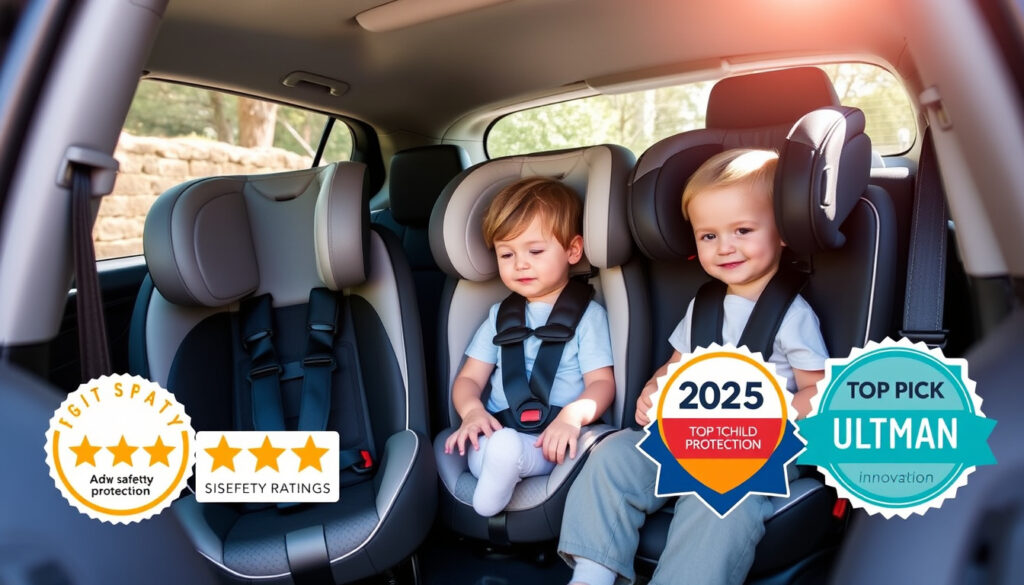
Best Toddler Car Seats – Top Safety Picks for 2025
Automotive Safety Review
Automotive Safety Review
What Are the Best Toddler Car Seats in 2025?
Selecting the right car seat for a toddler between the ages of 1 and 3 involves weighing crash test performance, ease of installation, and how well a seat accommodates a growing child. Parents and caregivers face numerous options, each claiming to offer the best protection. Independent testing organizations have evaluated these seats using rigorous protocols that measure head injury criterion (HIC) scores and chest clip G-forces during simulated collisions. The findings consistently point to a handful of models that outperform others across multiple categories.
This guide examines the top convertible car seats currently available for toddlers, drawing on crash test data, feature comparisons, and practical considerations for everyday use. Whether parents need a seat for a smaller vehicle, a tall child who has outgrown infant carriers, or a budget-friendly option that does not compromise on safety, there are evidence-based choices worth considering.
Industry experts and organizations such as BabyGearLab and Consumer Reports have published detailed analyses of seats marketed for toddlers aged 1 to 3 years. Their testing focuses on real-world scenarios, evaluating how seats perform when installed in various vehicle types and how they protect children of different body types. The results provide a clearer picture than marketing materials alone, helping caregivers make informed decisions based on measurable criteria rather than brand perception alone.
Graco 4Ever DLX
Graco SlimFit
Graco Extend2Fit
Britax One4Life
Key Insights from Crash Testing
- The Graco 4Ever DLX recorded the lowest chest clip G-forces among tested models, indicating superior chest protection during frontal impacts.
- Graco Extend2Fit achieved the lowest HIC scores overall, reflecting reduced risk of traumatic brain injury in collision scenarios.
- Extended rear-facing capacity up to 50 pounds significantly increases the usable lifespan of a convertible seat for growing toddlers.
- Models featuring side-impact protection technology demonstrated measurable improvements in limiting forces on a child’s head and neck.
- Narrow seat designs under 19 inches wide make installation feasible in compact and subcompact vehicles where space is limited.
- No-rethread harness systems allow parents to adjust fit as the child grows without disassembling the seat, maintaining consistent safety.
- Independent testing found Graco models easiest to install using LATCH connectors, reducing the likelihood of improper use.
Toddler Car Seat Comparison
| Model | Rear-Facing Limit | Forward-Facing Limit | Key Features | Seat Weight |
|---|---|---|---|---|
| Graco 4Ever DLX | 4–40 lbs | 22–65 lbs | 10-position no-rethread harness; easy LATCH install | ~20 lbs |
| Graco Extend2Fit | 4–50 lbs | 22–65 lbs | Extended legroom; TrueShield side-impact protection | ~19 lbs |
| Graco Turn2Me | 4–50 lbs | 22–65 lbs | Rotating design; 18.4″ width; lowest HIC among rotators | ~21 lbs |
| Graco SlimFit | 4–40 lbs | 22–65 lbs | Lightweight (18.5 lbs); better-than-average crash results | ~18.5 lbs |
| Britax One4Life | 5–50 lbs | 22–65 lbs (to booster 120 lbs) | ClickTight install; SafeCell impact protection | ~30 lbs |
| Chicco OneFit Max | 5–40 lbs | 26.5–65 lbs (to booster 100 lbs) | Strong side-impact performance; LeverLock install | ~25 lbs |
| Diono Radian 3QX | 4–50 lbs | 22–65 lbs (to booster 120 lbs) | Steel frame; anti-rebound bar; slim 17″ width | ~26 lbs |
When Can Toddlers Switch to Forward-Facing Car Seats?
The transition from rear-facing to forward-facing is one of the most consequential decisions parents make regarding their child’s car safety. Major health organizations, including the American Academy of Pediatrics, recommend keeping children in rear-facing seats for as long as possible, up to the maximum height and weight limits specified by the car seat manufacturer. For most toddlers between the ages of 1 and 3, this means remaining rear-facing well beyond their second birthday.
The rationale behind extended rear-facing stems from biomechanical research. A child’s spine and neck structures continue developing through early childhood. In a frontal collision, a rear-facing seat distributes crash forces across the entire back of the seat, cradling the head and neck more effectively. Forward-facing seats with harnesses provide excellent protection as well, but they place more stress on the upper body because the child is positioned to absorb impact in a different orientation.
Weight and Height Limits Explained
Most convertible car seats designed for toddlers accommodate rear-facing up to 40 or 50 pounds. The specific limits vary by model and are clearly marked on the seat shell and in the instruction manual. Parents should note both the weight limit and the height requirement, which typically states that the child’s head must be at least one inch below the top of the car seat shell.
For forward-facing use, the typical harness weight range extends from 22 pounds up to 65 pounds. Children should remain in a harnessed forward-facing seat until they reach either the upper weight limit of the harness (generally 65 pounds) or the height limit (usually between 49 and 57 inches), whichever comes first. Booster seat readiness typically begins around age 4 or 5, but this varies significantly based on the child’s physical development.
Signs a Toddler Is Ready to Transition
Even when a child approaches the maximum rear-facing limits, parents should evaluate both weight and height before switching orientation. If the child’s weight exceeds the rear-facing limit, transitioning is necessary for safety. Similarly, if the child’s head is within one inch of the seat’s top, forward-facing becomes appropriate. Until both thresholds are reached, keeping the seat rear-facing remains the preferred approach. For additional guidance on selecting the right car seat for this stage, parents can consult recommendations for best toddler car seats that account for these developmental milestones.
According to NHTSA guidelines, children should remain rear-facing until they reach the maximum height or weight limit allowed by the car seat manufacturer. Many toddlers will not outgrow their rear-facing limits until age 3 or later, depending on their growth rate and the specific seat model.
What Makes a Car Seat Best for Tall or Heavy Toddlers?
Children grow at different rates, and some toddlers exceed the average height and weight percentiles by a significant margin. For these children, standard car seats may feel cramped or become unusable before the child is developmentally ready to transition. Several models address this concern through extended limits and enhanced adjustability.
The Graco Extend2Fit stands out for tall toddlers because it offers rear-facing capacity up to 50 pounds with additional legroom extension. This allows children with longer torsos to sit more comfortably while remaining in the safer rear-facing position. The headrest adjusts through 10 positions, providing a proper fit as the child grows vertically.
Models Designed for Extended Use
The Diono Radian 3QX provides 12 headrest positions, offering approximately 22 percent more adjustment range than many competing models. This range proves particularly valuable for taller children who need the harness to be positioned higher on their shoulders. The steel frame construction adds stability without sacrificing the narrow profile needed for smaller vehicles.
The Chicco OneFit Max features 12 or more headrest positions along with extra legroom in rear-facing mode, making it suitable for toddlers who have outgrown infant carriers but still need generous space. Its forward-facing mode extends to a booster seat capacity of 100 pounds, providing a longer usable lifespan than seats limited to harness-only forward-facing.
Considerations for Larger Vehicles
Parents driving trucks, SUVs, or minivans may find that larger vehicles accommodate bigger car seats without issue. However, those in sedans or compact cars need to measure carefully. The Diono Radian’s 17-inch width represents one of the narrowest options available, while the Graco Turn2Me measures 18.4 inches wide and includes a rotating feature that simplifies getting children in and out.
How to Choose and Install the Right Toddler Car Seat?
Installation methodology plays a critical role in how effectively a car seat protects a child. A seat that is improperly installed can perform poorly even in moderate collisions, regardless of its crash test ratings. Parents should understand the installation options available for their chosen seat and practice the process before relying on it for daily transportation.
LATCH System Installation
The Lower Anchors and Tethers for Children (LATCH) system uses dedicated vehicle anchors to secure car seats without requiring a seatbelt thread. Most modern vehicles include LATCH anchors in the rear outboard seats and the center seat when applicable. Graco seats typically use push-connect LATCH connectors that click into place easily, and many parents report successful installations without needing rolled towels or pool noodles to achieve a tight fit.
Britax seats feature the ClickTight installation system, which opens the seat’s base to allow the seatbelt to be routed through a dedicated path before closing and locking. This mechanism reduces user error by creating a more intuitive process. The Chicco OneFit Max uses a LeverLock belt tensioning system that works in conjunction with premium LATCH connectors to simplify installation.
The NHTSA recommends checking car seat installation by gripping the seat at the belt path and attempting to move it no more than one inch in any direction. If the seat shifts more than this, additional adjustment is needed. Many fire stations and police departments offer free inspections to verify proper installation.
Evaluating Fit Before Purchase
Before committing to a specific model, parents are encouraged to test fit in their vehicle. Major retailers often display floor models that can be placed in the target vehicle for a test fit. This step is particularly important for owners of compact cars, where seat width and rear-facing angle requirements can create challenges. The Diono Radian and Britax One4Life both offer slim profiles suitable for smaller vehicles, while the Britax One4Life includes a removable cup holder that can be repositioned or removed to save space.
Parents should also evaluate how the seat functions with their child inside. Buckling and unbuckling the harness dozens of times per week demands a mechanism that is both secure and convenient. No-rethread harnesses found on models like the Graco 4Ever DLX allow harness height adjustment without disassembly, preserving the seat’s installation while accommodating growth spurts.
Vehicle LATCH anchors are typically rated for children up to 48 pounds (combined child and seat weight). Once a child exceeds this threshold, parents should transition to seatbelt installation for forward-facing seats. Always consult the vehicle owner’s manual for specific LATCH weight limits.
The Evolution of Car Seat Safety Standards
Understanding how car seat regulations and testing have developed provides useful context for evaluating modern options. Safety standards have become increasingly rigorous over the past two decades, leading to measurable improvements in child passenger outcomes.
- 2011: The U.S. Department of Transportation mandated that all new child restraint systems manufactured for sale in the United States include LATCH hardware. This requirement standardized installation methods across manufacturers.
- 2013: Updated federal safety standards introduced requirements for side-impact testing, pushing manufacturers to develop enhanced energy-absorbing materials and structural reinforcements.
- 2017–2018: Graco introduced the Extend2Fit series with extended rear-facing capacity up to 50 pounds, responding to AAP recommendations for keeping children rear-facing longer.
- 2020–2022: Independent testing organizations began publishing quantitative crash test data, including HIC scores and chest clip G-forces, giving consumers access to performance metrics previously available only to manufacturers.
- 2024–2025: New models from Britax and Chicco incorporated advanced side-impact protection systems, while Graco expanded its lineup with the SlimFit and Turn2Me variants targeting specific use cases like small cars and easier loading.
What We Know and What Remains Unclear
The available research supports several clear conclusions about toddler car seat selection and use. Extended rear-facing beyond age 2 reduces injury risk in frontal collisions. Convertible seats with higher rear-facing weight limits accommodate growing toddlers more safely. Installation ease correlates with correct use, making simpler systems preferable for caregivers who transport children infrequently.
| Established Information | Uncertainties |
|---|---|
| Rear-facing reduces spinal injury risk in infants and toddlers | State-by-state rear-facing age mandates vary; no federal law |
| Graco models consistently score well in independent crash tests | IIHS ratings for specific 2025 models remain limited |
| LATCH simplifies correct installation for most caregivers | Optimal rear-facing duration beyond manufacturer limits unstudied |
| Higher weight limits extend usable seat lifespan | Long-term outcomes comparing specific seat models unknown |
| Narrow seats fit better in compact vehicles | User polls or aggregated parent feedback not widely published |
Understanding Safety Ratings and Testing Methodology
Crash test ratings for car seats are generated through standardized procedures that simulate various collision scenarios. The Head Injury Criterion (HIC) score measures the likelihood of traumatic brain injury based on recorded acceleration data during frontal impacts. Lower HIC values indicate better protection. Chest clip G-forces measure the load placed on a child’s chest during a crash, with lower values representing reduced risk of internal injuries.
BabyGearLab conducts commissioned crash tests using professional equipment and publishes detailed methodology alongside results. Their testing evaluates seats in identical conditions, allowing direct comparisons across brands and models. Consumer Reports employs similar approaches, though their 2025 data emphasizes different seat categories with less focus on toddler-specific models. NHTSA provides general guidance on car seat selection and maintains a vehicle ease-of-use rating system, but does not publish comparative crash test scores for individual seat models.
When evaluating claims about seat safety, parents should consider whether testing was conducted by independent organizations rather than manufacturers. Self-reported test data may use different methodologies or acceptance thresholds, making cross-brand comparisons unreliable. The sources cited in this article draw on independent testing to provide a consistent evidence base.
The American Academy of Pediatrics recommends that children remain in a rear-facing car seat until they reach the maximum weight or height limit allowed by the seat manufacturer, noting that most children will not outgrow rear-facing seats until they are at least 2 years old.
Summary and Next Steps
Choosing the best toddler car seat requires balancing crash test performance, installation practicality, and the specific needs of the child and vehicle. The Graco 4Ever DLX offers the best overall crash test performance according to independent analysis, while the Graco Extend2Fit provides the highest rear-facing limits for tall children. Budget-conscious parents can rely on the Graco SlimFit for solid protection at a reasonable price, and those driving smaller vehicles will appreciate the narrow profiles of the Diono Radian and Britax One4Life.
Before purchasing, parents should measure their vehicle’s back seat space, test-fit the chosen model if possible, and verify that the seat’s limits accommodate their child’s current size and expected growth. Registering the car seat with the manufacturer ensures receipt of safety notices and recall information. Consulting resources from the NHTSA car seat safety page provides additional guidance on proper use and local inspection services.
For a broader overview of available options, browse these Top convertible car seats evaluated through independent testing. Additional reviews and parent experiences are documented on sites offering Best convertible car seats comparisons.
Frequently Asked Questions
What is the best car seat for a 2 year old?
The Graco 4Ever DLX and Graco Extend2Fit consistently rank among the best options for 2-year-olds based on crash test performance. Both offer extended rear-facing capacity and adjustable headrests that accommodate growing toddlers effectively.
How long should a child rear face?
Children should remain rear-facing until they reach the maximum height or weight limit specified by the car seat manufacturer. Many toddlers can safely remain rear-facing until age 3 or later with seats rated to 50 pounds.
What is the best budget toddler car seat?
The Graco SlimFit provides better-than-average crash test results at a moderate price point. It weighs approximately 18.5 pounds and offers LATCH installation without requiring additional tools or modifications.
What car seat is best for a tall toddler?
The Graco Extend2Fit and Diono Radian 3QX accommodate tall toddlers well. Both models offer extended rear-facing limits up to 50 pounds and multiple headrest positions to ensure proper harness fit as the child grows vertically.
Are Graco car seats safe for toddlers?
Yes. Independent crash testing by BabyGearLab found Graco models, including the 4Ever DLX and Extend2Fit, achieved top scores for HIC and chest clip G-forces. Graco seats are widely regarded as safe when installed and used according to manufacturer instructions.
When can my toddler face forward in a car seat?
A toddler should transition to forward-facing only after reaching the maximum rear-facing weight or height limit of their current seat. Switching prematurely reduces protection in frontal collisions. The NHTSA recommends keeping children rear-facing until they outgrow the seat’s limits.
What weight limit for toddler car seats?
Rear-facing weight limits typically range from 40 to 50 pounds depending on the model. Forward-facing harness limits usually begin around 22 pounds and extend to 65 pounds before transitioning to a booster seat becomes necessary.
How to install a toddler car seat correctly?
Using either the LATCH system or a seatbelt, route the connection through the appropriate belt path and ensure the seat does not move more than one inch in any direction when gripped at the belt path. Consult both the car seat manual and vehicle owner’s manual for specific instructions.
More related posts
 Who Was Melania Trump Before She Married? Early Life & Career
 Where to Watch England vs India Cricket Live in 2025
 Reverend and the Makers – Tour Dates, Members and Songs
 Jamie Dornan: Career, Personal Life, and Key Facts (2025)
 J.K. Simmons: From Whiplash Oscar to Iconic Movie Roles
 The Elder Scrolls IV Oblivion Remastered – Everything We Know
 Horizon Forbidden West PC: Specs, Performance, Release
 Stranger Thing Sea on 5 Volume 2 Relea e Date
