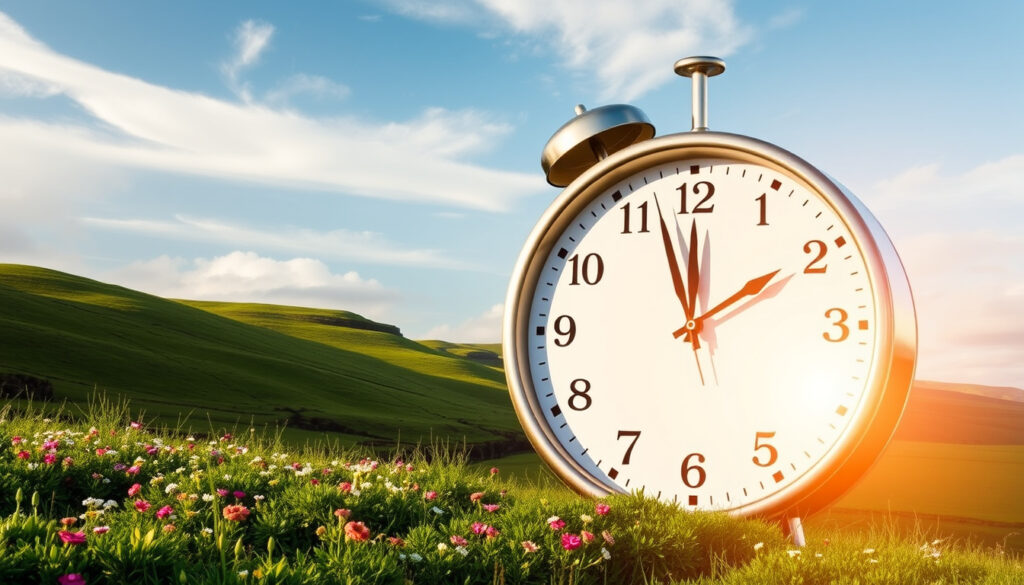
When Do Clocks Go Forward 2025? 30 March Ireland
If you’ve ever woken up an hour early after a clock change, you know the feeling. Whether you’re in Dublin, Cork, or Galway, the same rule applies across the entire island. Here’s everything you need to know about the 2025 daylight saving change — and a bit of history you might not expect.
Clocks go forward: 30 March 2025, 1am · Clocks go back: 26 October 2025, 2am · DST rule: Last Sunday of March/October · Location: Ireland
Quick snapshot
- Clocks forward: 30 March 2025 (time.now calendar)
- Clocks back: 26 October 2025 (time.now calendar)
- Uniform across all provinces (time.now)
- Post-2019 DST abolition discussions still unresolved (Wikipedia: Irish time)
- 2027 and beyond dates not officially confirmed (Wikipedia: Irish time)
- 2023: 26 March forward · 29 Oct back (Wikipedia: Irish time)
- 2024: 31 March forward · 27 Oct back (Wikipedia: Irish time)
- 2025: 30 March forward · 26 Oct back (Wikipedia: Irish time)
- 2026: 29 March forward (Wikipedia: Irish time)
- After the spring change, evenings stay lighter longer (time.now)
- Next change after 30 March: 26 October 2025 (time.now)
| Detail | Value |
|---|---|
| Forward Date | Sunday, 30 March 2025 |
| Forward Time | 1:00 am to 2:00 am |
| Back Date | Sunday, 26 October 2025 |
| Back Time | 2:00 am to 1:00 am |
| Summer offset | UTC+01:00 (Irish Standard Time) |
| Winter offset | UTC+00:00 (GMT) |
When to put the clock forward in 2025?
Exact date and time in Ireland
In Ireland, clocks go forward at 00:59 on Sunday, 30 March 2025, springing ahead to 2:00 am. That single minute delivers an extra hour of evening daylight for the months ahead. All four provinces — Connacht, Leinster, Munster, and Ulster — change simultaneously, with no regional variation across the island.
How to adjust your clock
- Set clocks forward 1 hour before bed on Saturday night, 29 March
- Smart devices update automatically — check phones, tablets, and computers
- Microwave ovens, radios, and older analogue clocks need manual adjustment
- Cars with GPS clocks may update overnight; verify Monday morning
Ireland operates on Irish Standard Time (IST, UTC+01:00) during summer, one hour ahead of Greenwich Mean Time. The UK calls its equivalent British Summer Time, but both zones share the same offset — UTC+01:00.
Does the clock go forward in March?
Last Sunday of March rule
Yes. Ireland follows the EU-synchronized rule: clocks shift on the last Sunday of March and the last Sunday of October. This keeps Irish time aligned with the rest of Europe and prevents cross-border scheduling chaos for transport and trade.
2025 specific date
The last Sunday of March 2025 falls on the 30th. That makes it the official DST start date for the Republic — a rule that has held since Ireland adopted EU time directives. The next change after 26 October brings us back to the last Sunday of March 2026, confirmed as 29 March.
When do the clocks change?
Spring forward schedule
The spring shift moves clocks forward one hour, trading an hour of morning light for extra evening daylight. In 2025 this happens on 30 March at 00:59, when clocks jump to 2:00 am. Sunrise arrives later that morning, but sunset stretches nearly an hour later by summer.
Autumn back schedule
Clocks revert on 26 October 2025 at 1:59 am, falling back to 1:00 am. That gives everyone a genuine extra hour of sleep — or an extra hour of morning commute in the dark, depending on your schedule. The cycle then repeats the following March.
Do I lose an hour of sleep in March?
Impact of clock change
Yes. On 30 March 2025 you lose one hour of sleep. The alarm that rings at 7:00 am will feel like 6:00 am for a day or two as your body adjusts. Research links the spring shift to a measurable spike in road accidents and workplace errors in the following 48 hours.
Tips to adjust
- Go to bed 15 minutes earlier on Saturday night to soften the shock
- Get bright light exposure first thing Sunday morning — it helps reset your internal clock
- Avoid heavy meals and alcohol late in the evening
- Give yourself a buffer in the morning for the first few days
When do clocks go back in Ireland 2025?
Exact date and time
Clocks go back on Sunday, 26 October 2025 at 1:59 am, dropping back to 1:00 am. That extra hour arrives just as winter darkness closes in, restoring morning daylight. For parents with school-age children, this change matters more than the spring shift — kids trudge to bus stops in near-darkness for months after the autumn change.
Sunrise and sunset shift
On 30 March 2025, sunrise shifts about an hour later while sunset pushes nearly an hour later. By late October, that reverses — sunrise comes earlier, but the sun sets noticeably sooner. The practical effect: mornings feel lighter, evenings feel shorter, and your evening commute happens in the dark.
The trade-off between morning and evening light isn’t just aesthetic — it affects road safety, energy consumption, and public health. Evening daylight correlates with reduced accidents and improved outdoor activity, which is why the spring change exists despite its disruption.
Ireland’s historical clock change anomaly
Most people don’t realise it, but Ireland experimented with permanent daylight saving time in 1968 and 1969. The Standard Time Act 1968 set Irish clocks one hour ahead of GMT year-round — no autumn rollback. The government reversed course after one year following public complaints about dark winter mornings, particularly from farmers and parents with schoolchildren. (Wikipedia: Irish time history)
The experiment is instructive now because the EU has revisited the DST abolition question several times since 2019, but no binding action has followed. Ireland continues to observe the twice-yearly change, synchronized with the rest of Europe.
Confirmed vs unclear
Confirmed
- 30 March 2025 at 00:59 to 02:00 — clocks forward
- 26 October 2025 at 01:59 to 01:00 — clocks back
- Uniform across all Irish provinces
- 29 March 2026 — next forward date
- DST synchronized with EU-wide rules
- IST summer, GMT winter
Unclear
- Whether the EU will ever actually abolish DST
- 2027 onward dates not officially published
- Public polling data on Irish attitudes to DST
Quotes
“The Standard Time Act 1968 legally established that ‘the time for general purposes in the State (to be known as standard time) shall be one hour in advance of Greenwich mean time throughout the year’.”
— Standard Time Act 1968, Irish legislation
“Last Sunday in March — move forward one hour. Last Sunday in October — move back one hour.”
— TimeAndDate.com via jump2eu DST guide
Related reading: When will it snow in Ireland · MOT and service near me Ireland
Ireland’s clocks spring forward at 1am on 30 March 2025 under standard DST rules, with Ireland 2025 clock change dates outlining the full annual schedule and tips.
Frequently asked questions
When does the hour go forward?
Clocks go forward at 00:59 on Sunday, 30 March 2025, setting the time to 2:00 am. The change falls on the last Sunday of March, as set by EU-synchronized Irish regulations.
Did the clocks go forward last night?
If you’re reading this before 30 March 2025, no — they haven’t yet. After 30 March, the next relevant date is 26 October 2025, when clocks go back.
When do clocks go back Ireland 2026?
Clocks go back on the last Sunday of October 2026, which falls on 25 October 2026. The forward date that year is 29 March 2026.
What year did the clock not change in Ireland?
1968-1969. The Standard Time Act 1968 made Irish Standard Time permanent for two years, removing both the spring forward and autumn back. Public resistance, especially from rural communities, ended the experiment.
Do you get an extra hour when clocks go back?
Yes. On 26 October 2025, clocks fall back from 1:59 am to 1:00 am, giving anyone awake that window an extra hour — or letting you sleep until your usual alarm time and gain an hour.
Why did clocks not go back in 1968?
The government aimed to maximize evening daylight for economic and safety reasons. However, the scheme backfired in winter months, when children walked to school in near-total darkness. The reversal came quickly — a lesson in the real trade-offs between morning and evening light.
More related posts
 Last One Laughing UK Season 2: Winner, Cast, Episodes Guide
 Buffalo Bills vs Baltimore Ravens Match Player Stats – Box Score, Key Performances
 All Creatures Great and Small Episodes: Guide to All Seasons
 Exeter City F.C. – History, Stadium and League One Status
 J.K. Simmons: From Whiplash Oscar to Iconic Movie Roles
 Ibrahim Traoré: Religion, Ideology, and Burkina Faso Coup
 Clocks Go Forward 2025: Date, Sleep Impact & Tips
