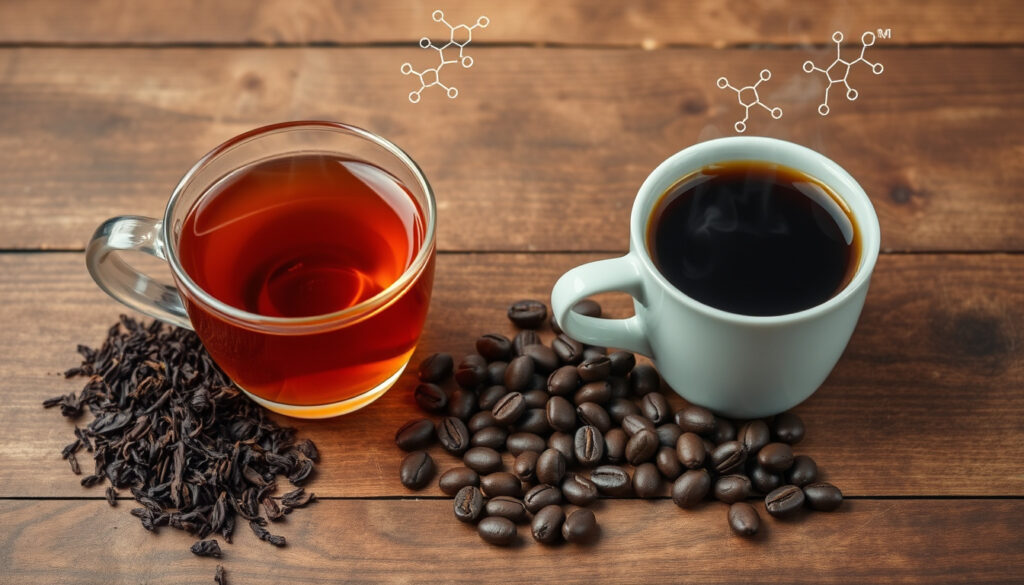
Does Tea Have Caffeine? Caffeine in Tea vs Coffee Explained
If you’ve ever wondered whether your daily cup of tea delivers a noticeable caffeine hit, you’re not alone – and the answer is more interesting than a simple yes or no. Tea does contain caffeine, but the amount varies widely based on the type of leaf, processing, and brewing method; this guide combines data from health authorities and tea experts to clarify how much caffeine is in your cup and how it compares to coffee.
Average caffeine in 8 oz black tea: 47 mg ·
Average caffeine in 8 oz brewed coffee: 95 mg ·
Caffeine content in tea leaves: 4% by weight ·
FDA daily caffeine limit for adults: 400 mg
Quick snapshot
- Brewed black tea contains 48 mg of caffeine per 8 oz serving (Mayo Clinic nutrition resource)
- Brewed coffee contains 96 mg of caffeine per 8 oz serving (Mayo Clinic nutrition resource)
- Brewed green tea contains 29 mg of caffeine per 8 oz serving (Mayo Clinic nutrition resource)
- Exact caffeine content varies widely by brand, brewing time, and water temperature (Breville brewing guide)
- “Theine” is chemically identical to caffeine; differences in effect are due to other compounds like L‑theanine (Arteamony (tea blog))
- The term “theine” was coined in 1838 to distinguish tea’s caffeine from coffee’s, though they are the same molecule (Arteamony (tea blog))
- For a lower‑caffeine option, choose green or white tea; for a higher dose, go with matcha or black tea (Mayo Clinic nutrition resource)
- Herbal teas are naturally caffeine‑free and safe for any time of day (Mayo Clinic nutrition resource)
Six key data points show the range of caffeine you can expect from different tea types and how they stack up against coffee.
| Attribute | Value |
|---|---|
| Tea plant species | Camellia sinensis |
| Caffeine in tea leaves | 4% of dry weight |
| Caffeine in coffee beans | 0.9‑2.6% of dry weight |
| Caffeine in black tea (8 oz) | 47 mg |
| Caffeine in brewed coffee (8 oz) | 95 mg |
| FDA daily limit | 400 mg for healthy adults |
Does regular tea have caffeine?
Yes – any tea made from the leaves of Camellia sinensis contains caffeine. The amount you get depends on the tea type, how it’s processed, and the way you brew it.
How much caffeine is in black tea?
Mayo Clinic lists brewed black tea at 48 mg caffeine per 8‑ounce serving (Mayo Clinic nutrition resource). Breville reports a range of 47 to 90 mg, influenced by leaf cut and steep time (Breville brewing guide). A 2004 British study of consumer‑prepared cups found an average of 40 mg for black tea (Adagio Teas (specialty retailer) citing the study).
Does green tea contain caffeine?
Yes. Mayo Clinic data puts brewed green tea at 29 mg per 8‑ounce cup (Mayo Clinic nutrition resource). Sugimoto Tea Company reports a similar range of 30‑50 mg (Sugimoto Tea Company (green tea specialist)).
Caffeine in white and oolong teas
White tea, the least processed, typically contains 25 mg per 8‑ounce cup (Breville brewing guide). Oolong falls between green and black, averaging about 30‑40 mg.
The implication: all true teas deliver a measurable amount of caffeine, but green and white teas offer a gentler start than black.
For someone switching from coffee to tea for health reasons, green tea provides roughly one‑third the caffeine of a standard coffee – enough to feel alert without the jitters.
Which is more caffeine, coffee or tea?
By nearly every measure, coffee contains more caffeine per cup than tea. But the picture is more surprising when you look at the raw leaf versus bean.
Caffeine content in coffee vs tea by cup
Mayo Clinic data shows 96 mg for brewed coffee versus 48 mg for black tea (Mayo Clinic nutrition resource). The FDA also cites 80‑100 mg as typical for an 8‑ounce coffee (U.S. Food and Drug Administration consumer update).
Why tea feels milder than coffee
Tea leaves actually contain more caffeine by weight (4% vs. 0.9‑2.6% for coffee beans), but less of it extracts into the cup because you use far fewer leaves per serving and steep at lower temperatures (Breville brewing guide).
The role of L‑theanine in tea
Tea contains the amino acid L‑theanine, which promotes calmness and slows caffeine absorption – producing a “calm alertness” that coffee doesn’t provide (Breville brewing guide).
The trade‑off: coffee gives a quicker, stronger jolt; tea delivers a longer, smoother lift.
| Beverage (8 oz) | Average caffeine (mg) | Key factor |
|---|---|---|
| Drip coffee | 96 | Hot water extracts more caffeine |
| Black tea | 48 | Fully oxidized leaves |
| Green tea | 29 | Unoxidized, lower temp brew |
| White tea | 25 | Minimally processed, short steep |
| Matcha (latte size) | 70 | Whole leaf powder |
| Herbal tea | 0 | Not from Camellia sinensis |
What kind of tea has no caffeine?
Only teas made from plants other than Camellia sinensis are naturally caffeine‑free. These are called herbal teas or tisanes.
Herbal teas and tisanes
Common caffeine‑free options include rooibos, chamomile, peppermint, and hibiscus. They contain 0 mg of caffeine and are safe for any time of day (Mayo Clinic nutrition resource).
Decaf tea vs naturally caffeine‑free
Decaf tea is still made from Camellia sinensis but undergoes a process to remove ~97% of its caffeine. Mayo Clinic lists decaf black tea at 2 mg per 8‑ounce serving (Mayo Clinic nutrition resource).
Top caffeine‑free tea varieties
- Rooibos (red bush) – nutty, caffeine‑free
- Chamomile – floral, calming
- Peppermint – refreshing, digestive
- Hibiscus – tart, vitamin‑rich
The catch: if you see “herbal tea” on a label, always check the ingredients – blends sometimes contain small amounts of true tea for flavour.
Which tea is highest in caffeine?
Among traditional teas, matcha tops the list because you consume the whole ground leaf, not just the infusion.
Matcha and powdered teas
Matcha delivers about 70 mg of caffeine per serving (1 tsp powder made into 2 oz) – higher than a typical cup of black tea (Breville brewing guide).
Black tea vs yerba mate
Yerba mate is not a true tea but a South American infusion; it contains roughly 80 mg per 8‑ounce cup (Adagio Teas). Among true teas, black tea has the highest caffeine among the standard leaf‑only preparations.
Caffeine levels by tea type
From lowest to highest: white (~25 mg) → green (~29 mg) → oolong (~35 mg) → black (~48 mg) → matcha (~70 mg).
Why this matters: if you’re looking for a caffeine lift without hitting coffee levels, black tea or matcha are your best true‑tea bets.
For tea drinkers who want maximum alertness, matcha offers roughly the same caffeine as a half‑cup of coffee – but with added L‑theanine for a smoother ride.
Will tea keep me awake?
Yes – caffeine in tea can disrupt sleep if consumed too close to bedtime. The effect depends on the dose and your individual sensitivity.
How caffeine in tea affects sleep
The FDA notes that caffeine affects everyone differently, but consuming it within 6 hours of bedtime can reduce sleep quality (U.S. Food and Drug Administration consumer update). A cup of black tea has half the caffeine of coffee, so it may be less disruptive – but still enough to matter.
Best low‑caffeine teas for evening
Herbal teas (chamomile, peppermint, rooibos) contain no caffeine and are ideal before bed. Decaf black tea (2 mg) is another option if you miss the flavour.
The benefits of drinking tea before bed
Caffeine‑free herbal teas can promote relaxation. Chamomile, for example, is associated with improved sleep quality due to its apigenin content.
The trade‑off: if you’re sensitive to caffeine, switch to herbal after 6 p.m. to protect your sleep.
Confirmed facts vs. what’s unclear
Confirmed facts
- Tea from Camellia sinensis contains caffeine (Mayo Clinic)
- Coffee has more caffeine per cup than tea (Mayo Clinic)
- Herbal teas are caffeine‑free (Mayo Clinic)
- Decaf tea retains small amounts of caffeine (2 mg per 8 oz) (Mayo Clinic)
- L‑theanine moderates caffeine effects in tea (Breville)
What’s unclear
- Exact caffeine content varies widely by brand, brewing time, and water temperature (Breville)
- “Theine” is chemically identical to caffeine; differences in effect are due to other compounds (Arteamony)
Expert perspectives
Brewed coffee contains 96 mg of caffeine per 8‑ounce cup, while brewed black tea contains 48 mg – roughly half the amount.
Mayo Clinic nutrition experts (clinical authority)
Tea contains L‑theanine, an amino acid that promotes calmness and slows the absorption of caffeine, resulting in a more balanced energy lift.
Breville brewing specialists (appliance and beverage expert)
A widely cited 2004 British study of 200 consumer‑prepared cups found average caffeine levels of 40 mg in black tea versus 105 mg in drip coffee.
Adagio Teas (specialty retailer citing the study)
The U.S. FDA says 400 mg of caffeine per day is generally not associated with negative effects for most healthy adults.
U.S. Food and Drug Administration (federal regulatory agency)
Summary
Tea does contain caffeine – in amounts that range from 25 mg in a cup of white tea to 70 mg in a serving of matcha. For most people, the caffeine in tea provides a gentler, longer‑lasting alertness than coffee, thanks to L‑theanine and lower extraction rates. The clear choice for anyone watching their caffeine intake: herbal teas for zero caffeine, green or white for low doses, and black or matcha for a moderate lift. For caffeine‑sensitive readers, the safest move is to avoid true teas after 6 p.m. and stick with herbal infusions.
Frequently asked questions
Does all tea have caffeine?
All true teas from Camellia sinensis (black, green, white, oolong, pu‑erh) contain caffeine. Herbal teas (rooibos, chamomile, peppermint) are naturally caffeine‑free.
How much caffeine is in a cup of green tea?
Mayo Clinic reports 29 mg per 8‑ounce cup, while Sugimoto Tea Company gives a range of 30‑50 mg depending on brewing.
Can I drink tea before bed?
It depends on the type. Herbal teas are fine. True teas contain caffeine and may disrupt sleep – stop by 6 p.m. if you’re sensitive.
Is decaf tea completely caffeine‑free?
No. Decaf black tea retains about 2 mg per 8‑ounce cup (Mayo Clinic).
Does matcha have more caffeine than coffee?
Matcha has about 70 mg per serving, while brewed coffee has 96 mg – so coffee still has more per cup.
Why does tea make me feel calm despite caffeine?
L‑theanine in tea promotes relaxation and slows caffeine absorption, creating a “calm alertness.”
Does chai tea have caffeine?
Traditional chai is made with black tea, so it contains caffeine – typically 40‑50 mg per 8‑ounce cup.
Is there caffeine in white tea?
Yes, white tea contains about 25 mg per 8‑ounce cup – the lowest among true teas.
More related posts
 The Life of Chuck: Plot, Cast, and Reverse Narrative
 John Lydon: Health, Politics, and Personal Life – Full Biography
 Samsung Z Flip 5: Issues, Lifespan, and Review – Is It Worth It?
 Vera Farmiga Movies and TV Shows: Complete Career Guide
 How to Work Out Square Metres: Rooms, Floors & Shapes Guide
 Go Ahead Eagles Standings: Eredivisie Table & Results
 Gemma Owen Love Island: Age, Season, Relationship & Career
 Nicholas Ralph: Accent, Partner, and TV Role
