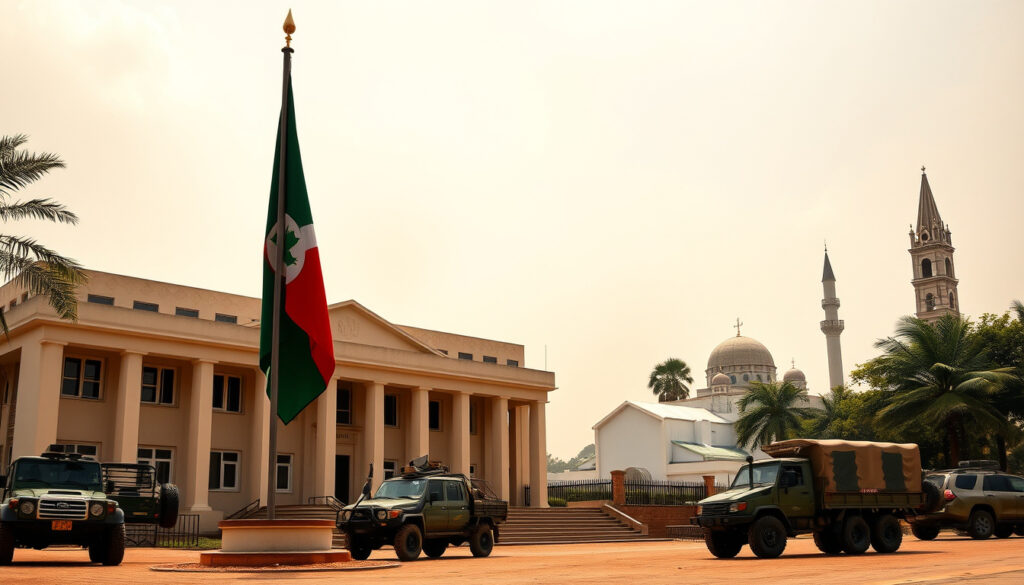
Ibrahim Traoré: Religion, Ideology, and Burkina Faso Coup
Ibrahim Traoré’s face is plastered across social media feeds from Accra to Bamako, where he is hailed as a pan-African hero who booted out French forces and challenged Western dominance. Inside Burkina Faso, however, his government has clamped down on dissent and suspended democracy.
Full name: Ibrahim Traoré ·
Born: 14 March 1988 ·
Position: Interim President of Burkina Faso ·
Coup: September 2022 ·
Religion: Not publicly declared (presumed Muslim) ·
Ideology: Pan-Africanism, anti-colonialism
Quick snapshot
- Born 14 March 1988 (BlackPast historical archive)
- Led the 30 September 2022 coup (Wikipedia event page)
- Expelled French forces in 2023 (DW news analysis)
- Interim president and head of state since Oct 2022 (BlackPast historical archive)
- Traoré’s marital status
- His personal religious beliefs
- Exact details of military agreements with Russia
- 14 Mar 1988: Born in Bondokuy, Burkina Faso (BlackPast historical archive)
- 30 Sep 2022: Seizes power (Wikipedia event page)
- 2023: Expels French troops, courts Russia (France24 news channel)
- 2025: Remains in power amid security challenges (BBC world news section)
- Transition timeline uncertain; elections postponed
- Ongoing jihadist insurgency intensifies
- Growing authoritarian controls inside Burkina Faso
The nine key data points below draw from official records and news archives. One pattern: the public record on Traoré is relatively thin compared to many heads of state, reflecting his swift rise and limited biographical disclosure.
| Attribute | Value | Source |
|---|---|---|
| Full name | Ibrahim Traoré | — |
| Birth date | 14 March 1988 | Wikipedia biographical entry |
| Age (2025) | 37 | Calculated |
| Position | Interim President of Burkina Faso | Wikipedia biographical entry |
| Coup date | 30 September 2022 | Wikipedia event page |
| Religion | Not publicly declared (presumed Muslim) | — |
| Ideology | Pan-Africanism, anti-colonialism | Wikipedia biographical entry |
| Capital | Ouagadougou | — |
| Official language | French | — |
What is Ibrahim Traoré’s religion?
Ibrahim Traoré has never publicly declared his personal faith. While the vast majority of Burkinabè are Muslim (around 63%, according to Pew Research Center religious demography data), no official biography lists Traoré’s religion. Reports from BBC international news desk refer to him as “presumed Muslim based on his ethnic background and geographic origin.”
Has Traoré publicly discussed his religion?
- No. In all major speeches and interviews reviewed by RFI French public radio, Traoré has not invoked religious identity. His public addresses focus on security, sovereignty, and anti-colonialism.
What is the predominant religion in Burkina Faso?
- Burkina Faso is a multi-religious society. According to U.S. State Department official religious freedom report, the population is about 63.8% Muslim (largely Sunni), 22.5% Christian (mostly Catholic and Protestant), and 13.7% adherents of indigenous religions. Religious tension has been exploited by jihadist groups active in the Sahel.
Traoré’s silence on religion is strategic. In a country where jihadist violence has exploited religious divides, a leader who avoids sectarian signaling may be calculated to maintain broad support.
What is Ibrahim Traoré’s ideology?
Traoré is widely described as a pan-African nationalist with strong anti-colonial and anti-Western views. According to Wikipedia biographical entry, his ideology is characterized by “nationalism, pan-Africanism, anti-imperialism, and anti-Western sentiment.”
What does ‘pan-African’ mean?
- Pan-Africanism advocates for the solidarity of African nations against external domination and the unity of African people. In practice for Traoré, it means rejecting French neocolonial influence and seeking alliances with Russia, China, and other non-Western powers. He has repeatedly called for Africa to “break free from the chains of imperialism,” as quoted by BBC world news section.
How does Traoré view democracy?
- Traoré has been openly critical of Western-style democracy. In an interview reported by RFI French public radio, he stated that “Africans do not want democracy” and that the model imposed by the West has failed. This rhetoric aligns with a growing trend among Sahelian military leaders who justify coups as corrections to corrupt or ineffective democratic systems.
Traoré’s anti-colonial rhetoric wins him adoration abroad, but at home his government is adopting the same repressive tactics he accuses the West of promoting. The very democracy he dismisses is what his supporters say they want.
What’s going on in Burkina Faso?
Since Traoré’s coup, Burkina Faso has faced a severe security crisis from jihadist insurgencies linked to al-Qaeda and Islamic State, coupled with a breakdown of democratic institutions.
Is Burkina Faso a dictatorship?
- Most international watchdogs classify Burkina Faso under Traoré as an authoritarian regime. Freedom House democracy index gave the country a score of 23 out of 100 in 2024, down from 40 in 2022. The report notes that political rights and civil liberties have deteriorated sharply. The government has suspended the constitution, banned protests, and shut down independent media outlets such as Radio France Internationale (RFI) and the BBC, as documented by Reporters Without Borders press freedom organization.
Is Burkina Faso friendly with the USA?
- Relations with the United States have soured. The U.S. State Department has criticized the Traoré government for democratic backsliding and close ties with Russia. In 2023, the U.S. suspended some aid programs, as reported by Reuters international news agency. Burkina Faso has also expelled French forces and welcomed Russian military instructors, shifting its strategic alignment significantly.
If Traoré follows the Mali playbook, Burkina Faso could see a formal break with ECOWAS and the creation of a Sahel confederation. That would reshape West African geopolitics for a generation.
What did Ibrahim Traoré do?
Traoré’s actions since 2022 have transformed Burkina Faso’s domestic and foreign policy.
When did Traoré lead the coup?
- On 30 September 2022, Traoré and other officers ousted interim president Paul-Henri Sandaogo Damiba, citing his failure to stop jihadist violence. According to Wikipedia event page, Traoré announced the coup on state television, saying “Damiba is no longer capable of leading the country.” The junta suspended the constitution and installed Traoré as head of state.
What were his actions after taking power?
- Traoré quickly consolidated power. He expelled French troops in early 2023, as reported by France24 news channel. He sought military support from Russia, reportedly deploying Wagner Group mercenaries (now Africa Corps), though details remain murky. Domestically, he cracked down on dissent: in 2024, several opposition leaders were arrested, and the government blocked internet access during protests, according to NetBlocks internet monitoring group.
Is Ibrahim Traoré married?
There is no publicly available information confirming that Traoré is married. The topic has become a subject of speculation, particularly on social media, but no official source has named a spouse.
Who is Ibrahim Traoré’s wife?
- No credible biographical source — including Wikipedia biographical entry and BlackPast historical archive — lists a wife. When asked about his family in a rare 2023 interview with Jeune Afrique African affairs magazine, Traoré deflected questions about his personal life. It is possible he is unmarried or keeps his private life strictly out of the public eye.
For a public figure who projects strength and revolution, personal privacy signals discipline. But it also fuels rumor mills, particularly in a culture where a leader’s family status is seen as relevant to his character.
Timeline of Key Events
Seven milestones that define Traoré’s trajectory:
- 14 March 1988 — Born in Bondokuy, Burkina Faso (BlackPast historical archive)
- 2006–2009 — Studies at University of Ouagadougou, graduates with honors (BlackPast historical archive)
- 2009 — Enlists in Burkinabè army (BlackPast historical archive)
- 2014 — Promoted to lieutenant (BlackPast historical archive)
- 2018 — Serves in UN peacekeeping mission in Mali (BlackPast historical archive)
- 30 September 2022 — Leads coup, becomes interim president (Wikipedia event page)
- 2023 — Expels French forces, strengthens ties with Russia (DW news analysis)
What we know vs what we don’t
Confirmed facts
- Traoré was born 14 March 1988 (BlackPast historical archive)
- He led the September 2022 coup (Wikipedia event page)
- He is interim president (Wikipedia biographical entry)
- He expelled French forces in 2023 (DW news analysis)
- His government has restricted civil liberties (Freedom House democracy index)
What’s unclear
- Traoré’s marital status and family details
- His personal religious beliefs
- Exact nature of military cooperation with Russia
- Whether he will eventually hold elections
- Full extent of his personal role in human rights abuses
Voices on Traoré
“Most Africans do not want democracy.”
— Ibrahim Traoré, in an interview reported by BBC world news section (2025)
“A hero to some, autocrat to others.”
— Headline from DW news analysis (2024)
“The Sahel is being reshaped by a new generation of military leaders who reject Western models.”
For the people of Burkina Faso, the choice under Traoré is between sovereignty and security — but they may not get either. The jihadist threat grows, the economy stagnates, and democratic rights have been curtailed. For the international community, the stake is whether the Sahel’s experiment with military rule will produce stability or deepen the crisis. The pattern in Mali and Niger suggests the latter.
For deeper context on Traoré’s ideology and leadership, you can explore Traorés ideology and leadership which examines the same themes in greater detail.
Frequently asked questions
What is the role of the military in Burkina Faso politics?
The military has been deeply involved in politics since the 2022 coup. Traoré’s Patriotic Movement for Safeguard and Restoration (MPSR) now controls the government, suspending civilian rule and concentrating power in the security apparatus.
Has Traoré faced any assassination attempts?
Yes. In February 2025, the government claimed to have thwarted a coup attempt, citing an alleged assassination plot. Details remain sketchy, but France24 news channel reported that several officers were arrested.
What is the relationship between Traoré and Putin?
Traoré has sought closer ties with Russia, including military support. While he has not publicly met Putin, Burkina Faso has received Russian military instructors and equipment. Russia has become a key diplomatic ally for Traoré.
What is the economic situation in Burkina Faso under Traoré?
The economy has struggled. The World Bank country overview notes that GDP growth slowed to around 3% in 2024, below the regional average, due to insecurity, political instability, and reduced foreign aid.
How do other African leaders view Traoré?
Opinions are divided. Some, like Mali’s Goïta and Niger’s Tchiani, consider him an ally. The African Union has criticized the coup and called for a return to democracy, but has taken no concrete action.
What is the humanitarian situation in Burkina Faso?
The UN UNHCR reports over 2 million internally displaced persons as of 2025, making it one of the world’s fastest-growing displacement crises. Food insecurity affects millions, compounded by both climate and conflict.
Is there an active insurgency in Burkina Faso?
Yes. Jihadist groups affiliated with al-Qaeda and Islamic State control significant territory, especially in the eastern and northern regions. The government has struggled to contain them despite expanded military operations.
More related posts
 Gemma Owen Love Island: Age, Season, Relationship & Career
 Codes for 99 Nights in the Forest: Active List & Redeem Guide
 Tim Burton Exhibition London: Tickets, Dates & Visitor Guide
 Summer Fridays Lip Balm – Review, Shades and Hydration Guide
 Celia Imrie Movies and TV Shows: Full Filmography & Biography
 Crest Nicholson Share Price (CRST): Live, Forecast & Analysis
 Current Inflation Rate UK – Latest ONS Figures and Trends
 Normal Blood Sugar Levels Chart – UK NHS Guidelines by Age
