Emerald Cut Engagement Rings – Complete Buyer’s Guide
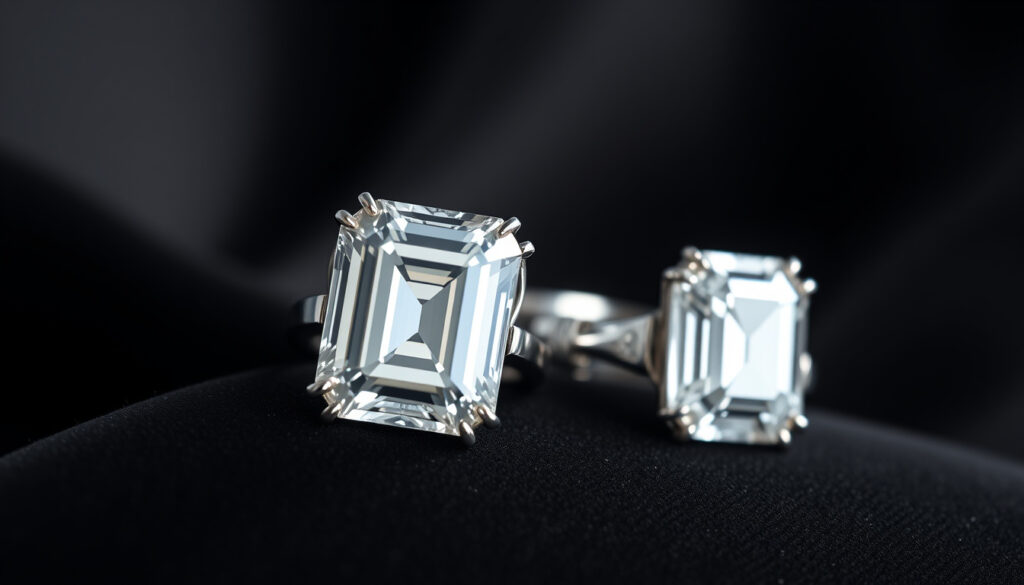
Emerald cut engagement rings have captivated buyers for decades with their distinctive rectangular silhouette and sophisticated step-cut facets. Unlike brilliant-cut diamonds that maximize sparkle, emerald cuts create a “hall-of-mirrors” effect that emphasizes clarity, color, and architectural elegance. This design choice places these rings firmly in the realm of understated luxury, appealing to those who value refined aesthetics over ostentatious brilliance.
The emerald cut originated in the early twentieth century as a practical solution for protecting valuable rough stones during the cutting process. Over time, this utilitarian beginning evolved into a sought-after aesthetic that now graces the fingers of celebrities and discerning buyers worldwide. Understanding the unique characteristics, advantages, and considerations of emerald cut engagement rings helps buyers make informed decisions when selecting this timeless design.
What Is an Emerald Cut Engagement Ring?
An emerald cut engagement ring features a rectangular or square shape with cropped corners, characterized by parallel rows of step-cut facets that descend toward the center of the stone. The large, open table—typically the flat top surface—allows light to enter and exit through carefully aligned planes rather than bouncing off numerous tiny facets as in round brilliant cuts. This architectural approach creates the distinctive “hall-of-mirrors” visual effect, where light appears to cascade in subtle, geometric patterns across the diamond’s surface.
Key Characteristics Defining the Emerald Cut
The step-cut design distinguishes emerald cuts from all other diamond shapes. These long, flat facets produce understated flashes of light rather than the intense brilliance associated with round or oval cuts. The cut highlights a diamond’s internal structure and symmetry, meaning any imperfections become more visible than in other shapes. This clarity-focused nature makes emerald cuts particularly suitable for stones with excellent color and few inclusions.
Beyond their optical properties, emerald cuts offer practical visual benefits. The elongated rectangular shape creates an illusion of longer, slimmer fingers when worn. Additionally, the large surface area means emerald cuts often appear larger per carat than round diamonds of equivalent weight. These rings pair naturally with Art Deco and mid-century modern aesthetic sensibilities, though contemporary designers have successfully integrated them into minimalist, vintage-modern hybrid styles.
Emerald Cut Engagement Ring Overview
Rectangular step-cut with cropped corners
High clarity focus with mirror-like luster
Celebrity-favored vintage elegance
$2,000 to $50,000+
Essential Facts About Emerald Cut Diamonds
- The “hall-of-mirrors” effect creates sophisticated, geometric light patterns rather than intense sparkle
- Step-cut design emphasizes the diamond’s internal clarity and structural symmetry
- Elongated shape visually flattens fingers and appears larger per carat than round cuts
- Large table exposes inclusions more readily, requiring higher clarity grades
- GIA certification is essential for accurate grading of emerald cut stones
- The cut originated in the 1920s for protecting rough diamonds during faceting
- Popular settings include solitaire, halo, three-stone, bezel, and east-west orientations
Emerald Cut at a Glance
| Aspect | Details | Ideal For |
|---|---|---|
| Cut Style | Step-cut with parallel facets | Modern architectural elegance |
| Light Performance | Subtle flashes, mirror-like | Understated sophistication |
| Clarity Priority | VS2 or higher recommended | High-quality, eye-clean stones |
| Carat Appearance | Larger face-up than round | Budget-conscious buyers |
| Historical Era | Art Deco, mid-century modern | Vintage-inspired aesthetics |
| Setting Versatility | Solitaire to three-stone | Various style preferences |
Pros and Cons of Emerald Cut Diamonds
Weighing the advantages and disadvantages of emerald cut engagement rings requires understanding how this cut differs fundamentally from more common brilliant-cut alternatives. The decision ultimately depends on personal priorities regarding sparkle, maintenance, and budget allocation for clarity grades.
Advantages of Choosing Emerald Cut
The emerald cut delivers a unique aesthetic appeal that many buyers find more sophisticated than conventional brilliant cuts. The subtle, mirror-like luster creates an appearance of refined elegance that complements both contemporary and vintage jewelry styles. The flat top surface sits lower on the finger, reducing the likelihood of snagging on clothing or objects during daily activities.
From a value perspective, emerald cuts often cost less than round diamonds of comparable carat weight because they require less precision cutting to achieve beauty. The elongated shape maximizes perceived size, allowing buyers to select smaller carat weights while maintaining a substantial visual presence. This efficiency makes emerald cuts particularly attractive for buyers seeking luxury appearance within moderate budgets.
Considerations and Potential Drawbacks
The most significant consideration when selecting an emerald cut involves clarity requirements. Because step-cut facets reveal the diamond’s internal structure more readily than brilliant cuts, any inclusions or blemishes become more visible. Jewelers typically recommend prioritizing VS2 or higher clarity grades for emerald cuts, which increases the cost per carat compared to lower clarity stones that might suffice for round brilliant cuts.
The cropped corners that define the emerald shape create potential vulnerability points if not properly protected. Settings with V-prongs or bezel designs help shield these corners from impact damage. Additionally, buyers seeking maximum fire and brilliance may find the subdued light performance of emerald cuts disappointing compared to round or oval alternatives.
When evaluating emerald cut diamonds, examine stones under 10x magnification before purchasing. The large table and open facets mean inclusions visible to the naked eye are more likely than with brilliant cuts. Aim for VVS to VS2 clarity grades for optimal beauty without unnecessary premium costs.
Comparing Emerald Cut Performance Across Aspects
| Aspect | Advantage | Limitation |
|---|---|---|
| Sparkle | Subtle, sophisticated luster | Less brilliance than round or oval cuts |
| Appearance | Timeless elegance, larger face-up look | Inclusions and flaws more visible |
| Durability | Flat top resists snagging | Cropped corners need protection |
| Versatility | Works with multiple settings and metals | Best suited for high-clarity stones |
Emerald Cut vs Other Popular Cuts
Understanding how emerald cuts compare to other diamond shapes helps buyers align their selection with personal preferences and priorities. Each cut offers distinct optical properties, price characteristics, and aesthetic appeal that suit different lifestyles and style sensibilities.
Emerald Cut vs Oval Cut
Oval cuts deliver brilliant, eye-catching sparkle through 58 facets that maximize light return. In contrast, emerald cuts produce subdued flashes within a geometric framework. While both shapes elongate the finger and appear larger per carat, ovals hide inclusions more effectively due to their faceting pattern. Ovals lack official cut grading from GIA, meaning quality assessment relies more heavily on visual evaluation. Price points remain similar, though oval stones often trade without official cut grades that would justify premium pricing.
Emerald Cut vs Round Brilliant
Round brilliant cuts represent the maximum brilliance benchmark against which all other shapes are measured. The circular form with precisely angled facets generates intense fire and sparkle that emerald cuts cannot match. However, round cuts hide inclusions well but demand premium pricing—typically 20-30% more than emerald equivalents of comparable carat weight. Emerald cuts appeal to buyers prioritizing architectural elegance and value efficiency over raw brilliance.
Emerald Cut vs Princess and Asscher
Princess cuts offer near-round brilliance levels in a square shape with sharp corners, appealing to those wanting modern sparkle in a geometric form. The square emerald alternative, known as the Asscher cut, shares the step-cut design philosophy but in a more compact square silhouette. Both princess and Asscher cuts require protected corners similar to emerald cuts, though the Asscher’s octagonal outline provides slightly more corner coverage than the emerald’s rectangular profile.
Emerald cuts offer understated luxury compared to the glamour of oval cuts or the modern edge of princess cuts. However, they demand superior clarity grades compared to the more forgiving sparkle of round cuts. Budget allocation should reflect this priority shift from cut quality to clarity grade.
Side-by-Side Cut Comparison
| Cut | Sparkle Style | Size Effect | Clarity Sensitivity | Aesthetic | Price Position |
|---|---|---|---|---|---|
| Emerald | Subtle, step-cut flashes | Larger per carat | High visibility | Vintage, geometric | Discounted vs round |
| Oval | Brilliant, eye-catching | Larger per carat | Hides well | Romantic, slimming | Similar to emerald |
| Princess | High brilliance | Standard | Moderate | Modern, versatile | 20-30% cheaper than round |
| Round | Maximum brilliance | Baseline | Hides well | Classic, versatile | Most expensive baseline |
| Asscher | Linear step-cut | Standard | High | Modern square | Premium for precision |
How Much Do Emerald Cut Engagement Rings Cost?
Pricing for emerald cut engagement rings varies widely based on the 4 Cs—carat, clarity, color, and cut quality—along with metal choices and setting complexity. Understanding the pricing landscape helps buyers establish realistic budgets and identify where to allocate resources for maximum visual impact.
Understanding Emerald Cut Value Drivers
Emerald cuts typically cost less than round brilliant diamonds of equivalent carat weight due to less emphasis on brilliance and higher rough yield during cutting. The step-cut design wastes less of the original stone, allowing cutters to preserve more weight. This efficiency translates to favorable pricing for buyers prioritizing size and clarity over maximum sparkle.
The Rapaport pricing system serves as the industry benchmark for wholesale loose diamond pricing. Emerald cuts trade at discounts compared to brilliant-cut stones because the market values round cuts more highly. This pricing differential creates opportunities for buyers to obtain larger or higher-quality stones within fixed budgets.
Budget Tiers and Expectations
For buyers working with budgets under $5,000, emerald cuts offer practical advantages. A 1 to 1.5 carat stone with VS or SI clarity and G to H color can typically be acquired within this range when purchasing loose diamonds via Rapaport pricing channels. Adding custom design elements increases costs by 20 to 50 percent depending on complexity and metal selection.
Mid-range purchases between $5,000 and $15,000 allow access to 1.5 to 2.5 carat stones with excellent clarity grades and near-colorless ratings. High-end purchases exceeding $15,000 open possibilities for 2.5 carat and larger stones with VVS clarity and D to F color ratings. Designer settings and intricate halo or three-stone arrangements push final prices toward the upper range of typical engagement ring budgets.
Exact 2025 per-carat pricing for emerald cuts varies based on specific vendor pricing structures and current market conditions. No standardized public pricing database exists for retail transactions. Buyers should compare multiple reputable vendors and insist on GIA certification to ensure accurate quality assessment regardless of price point.
Where to Buy Emerald Cut Engagement Rings
Reputable vendors specializing in fancy-cut diamonds offer the best selection for emerald cut buyers. Jewelers like Hamilton Jewelers and Sylvie Jewelry provide custom design services alongside curated loose stone inventories. Online educational resources from organizations like the Gemological Institute of America help buyers develop the knowledge needed for confident purchasing decisions.
How to Choose the Perfect Emerald Cut Engagement Ring
Selecting an emerald cut engagement ring requires balancing technical specifications with personal style preferences and practical lifestyle considerations. A systematic approach ensures buyers cover all essential factors while remaining flexible about elements that matter less to their specific situation.
Prioritizing the Four Cs for Emerald Cuts
Clarity deserves the highest priority when selecting emerald cuts due to the step-cut design’s visibility into the stone’s interior. Aim for VVS to VS2 clarity grades to ensure eye-clean appearance without paying premiums for undetectable perfection. Color requirements depend on metal selection—platinum and white gold settings allow slightly lower color grades to pass unnoticed, while yellow gold settings may mask some warmth but can clash with higher color grades.
Carat weight selection should consider the emerald cut’s efficient face-up appearance. A 1.5 carat emerald often appears equivalent to a 1.75 carat round, allowing buyers to select smaller weights without sacrificing visual presence. Cut quality remains important for symmetry and proportions, though the GIA does not provide official cut grades for emerald cuts as they do for round brilliants.
Setting and Metal Selection
Metal choice significantly impacts the overall appearance of emerald cut rings. Platinum and white gold provide modern contrast that emphasizes the diamond’s clarity and color. Yellow gold creates warmer, vintage-inspired aesthetics that complement the cut’s Art Deco heritage. Rose gold offers romantic warmth that pairs well with both contemporary and retro design sensibilities.
Setting styles range from minimalist solitaires that showcase the stone’s architectural qualities to elaborate halos that add visual weight and protect the corners. V-prong settings specifically protect cropped corners from impact damage while maintaining visibility of the stone’s facet pattern. Bezel settings offer maximum protection and contemporary appeal, though they partially obscure the diamond’s perimeter facets.
Lifestyle and Practical Considerations
Active individuals should consider how emerald cut stones interact with daily activities. The flat top profile sits closer to the finger than high-set brilliant cuts, reducing snag risk during physical work. However, the large table surface may show fingerprints and require more frequent cleaning. Buyers with hands-on careers might prefer lower-profile settings and harder metal choices like platinum that resist scratching.
Testing potential purchases under various lighting conditions reveals how the stone performs in real-world environments. Fluorescent, incandescent, and natural daylight each interact differently with step-cut facets. Requesting photographs or videos showing the stone in multiple lighting scenarios helps ensure satisfaction across daily wear conditions.
Emerald Cut Trends and Celebrity Examples
Celebrity influence has significantly shaped emerald cut engagement ring popularity over the decades. Understanding current market trends helps buyers align their selections with contemporary tastes while remaining timeless enough to transcend passing fads.
Celebrity Endorsement of Emerald Cuts
The emerald cut’s Art Deco glamour has attracted high-profile admirers throughout entertainment history. Grace Kelly’s engagement ring helped establish the cut’s association with Hollywood elegance. More recently, Beyoncé’s emerald cut engagement ring has renewed mainstream interest in the shape, demonstrating its enduring appeal across generations.
2025 Design Directions
Contemporary trends favor minimalist, vintage-modern hybrid aesthetics that showcase emerald cut stones without excessive ornamentation. East-west orientations—where the diamond sits horizontally rather than vertically—offer fresh takes on traditional presentations. Bezel settings provide updated security for the cropped corners while maintaining clean sight lines. Baguette accent stones add geometric flair without competing with the central emerald cut.
Ethical sourcing and sustainability concerns increasingly influence purchasing decisions. Lab-grown emerald cut diamonds offer larger carat weights within budget constraints while addressing environmental and ethical considerations. Reputable vendors now prominently feature lab-grown options alongside natural stones, giving buyers meaningful choices aligned with their values.
Customization Possibilities
Custom design services allow buyers to create unique emerald cut engagement rings that reflect individual style preferences. Jewelers like Hamilton and Sylvie specialize in personalized creations ranging from simple solitaire modifications to elaborate three-stone arrangements featuring emerald cuts flanked by complementary baguettes or smaller brilliants. Custom work typically adds 20 to 50 percent to base material costs but delivers one-of-a-kind results.
The Evolution of Emerald Cut Engagement Rings
The emerald cut’s journey from industrial necessity to luxury icon spans nearly a century of jewelry history. Tracing this development provides context for understanding why the cut commands its current market position and aesthetic associations.
- 1920s: Origins in practical innovation – Diamond cutters developed the emerald cut to protect valuable rough stones during the faceting process, reducing breakage while maximizing yield from irregularly shaped crystals.
- 1930s-1940s: Hollywood adoption – Studios promoted emerald cut jewelry for leading actresses, establishing associations between the cut and glamorous sophistication during the Art Deco era.
- 1950s-1960s: Grace Kelly era – The princess’s engagement ring cemented the emerald cut’s status as a choice for royalty and refined taste.
- 1980s-1990s: Revival periods – Vintage jewelry trends renewed interest in geometric cuts and step-faceted designs associated with Art Deco aesthetics.
- 2010s: Modern renaissance – Celebrities including Beyoncé popularized emerald cuts for new generations, driving sustained market growth.
- 2020s-present: Contemporary refinement – Minimalist designs and ethical sourcing concerns reshape how emerald cuts are presented and purchased.
What We Know and What Remains Uncertain
Transparency about the reliability and completeness of available information helps readers assess the guidance provided and identify areas requiring further personal research.
Established Information
- Emerald cuts create distinctive hall-of-mirrors light effects through step-cut faceting
- Clarity requirements exceed those of brilliant cuts due to visible internal structure
- The cut originated in the 1920s as a practical rough stone protection method
- Elongated shape appears larger per carat than round cuts of equivalent weight
- Celebrities including Grace Kelly and Beyoncé have popularized the cut across eras
- Pricing typically falls below round equivalents due to lower brilliance premiums
Uncertain or Evolving Information
- Precise 2025 per-carat pricing varies significantly by vendor and market conditions
- Light performance characteristics in very small carat sizes lack comprehensive study
- Long-term resale value projections vary by market and economic conditions
- Lab-grown diamond pricing structures continue evolving rapidly
- Specific 2025 celebrity engagement ring details remain limited in available sources
Historical and Cultural Context
The emerald cut’s emergence in the 1920s reflected broader technological and aesthetic currents of the Art Deco era. Industrial diamond cutting advances enabled new facet arrangements that prioritized structural efficiency alongside beauty. The geometric precision demanded by step-cut designs aligned with broader cultural appreciation for machine-age aesthetics and streamlined forms.
Throughout the twentieth century, emerald cuts remained associated with sophisticated taste and understated wealth rather than ostentatious display. The cut’s appeal to collectors and connoisseurs rather than mass markets contributed to its perception as a choice for those who understood diamond quality beyond simple sparkle measurements. This positioning continues to attract buyers seeking distinction from more common brilliant-cut selections.
Modern interest in vintage aesthetics has reinforced the emerald cut’s historical associations while opening new styling possibilities. Contemporary designers frequently reference Art Deco vocabulary while adapting historical forms to current manufacturing capabilities and material preferences. The result is a cut that feels simultaneously historical and fresh, appealing across generational and stylistic boundaries.
Expert Perspectives and Industry Standards
Industry organizations and certification bodies provide authoritative guidance on evaluating and purchasing emerald cut diamonds. The Gemological Institute of America’s diamond cut resources offer foundational knowledge for understanding how faceting affects light performance. Jewelry trade publications and professional associations publish ongoing research into consumer preferences and market trends affecting fancy-cut stones.
The emerald cut demands attention to proportions and symmetry that less structured cuts can mask. Buyers should examine these stones carefully under magnification, as the large table area leaves little room for concealment.
— Industry guidance on emerald cut evaluation standards
Retail jewelers increasingly emphasize educational resources to help consumers navigate fancy-cut purchasing decisions. Detailed comparison tools, virtual try-on capabilities, and comprehensive grading reports help bridge knowledge gaps between expert terminology and buyer comprehension. The shift toward transparency reflects both competitive pressures and genuine interest in helping buyers make satisfying long-term decisions.
Summary and Key Takeaways
Emerald cut engagement rings offer a distinctive alternative to more common brilliant-cut styles, prioritizing architectural elegance, clarity visibility, and value efficiency. The step-cut design creates sophisticated hall-of-mirrors effects rather than intense sparkle, appealing to buyers who appreciate understated luxury. Success with emerald cuts requires prioritizing clarity grades and selecting settings that protect cropped corners while complementing the stone’s geometric character.
Budget-conscious buyers find favorable value in emerald cuts, with quality stones available across wide price ranges. Customization possibilities allow personalization from minimalist solitaires to elaborate multi-stone arrangements. Celebrity endorsement and contemporary design trends support the cut’s enduring appeal while avoiding transient fashion associations.
Those exploring engagement ring options may also find value in reviewing additional style comparisons such as the Love Island Heart Rate Challenge for understanding how pop culture influences jewelry trends, or the Married with Children guide for historical context on engagement ring evolution.
Frequently Asked Questions
Where should I buy emerald cut engagement rings?
Reputable vendors specializing in fancy-cut diamonds offer the best selection. Look for jewelers who provide GIA certification, detailed grading reports, and reasonable return policies. Both specialized jewelry stores and established online retailers can provide quality options depending on your preference for in-person examination versus price convenience.
How important is clarity for emerald cut diamonds?
Clarity is extremely important for emerald cuts because step-cut facets reveal internal characteristics more readily than brilliant cuts. Target VVS to VS2 clarity grades for optimal appearance. Lower clarity stones may show visible inclusions that detract from the stone’s beauty.
What carat size works best for emerald cut engagement rings?
The 1 to 2 carat range represents the most popular selection for emerald cut engagement rings. The elongated shape creates a larger face-up appearance, meaning a 1.5 carat emerald often appears equivalent to a 1.75 carat round. Select based on budget and personal preference rather than targeting specific carat weights.
What metals pair well with emerald cut diamonds?
Platinum and white gold create modern contrast that emphasizes the diamond’s clarity and color. Yellow gold settings produce vintage-inspired warmth that complements the cut’s Art Deco heritage. Rose gold offers romantic softness that works with both contemporary and retro design sensibilities.
Are emerald cut diamonds more affordable than round cuts?
Emerald cuts typically cost less than round diamonds of comparable carat weight due to higher cutting yields and less emphasis on brilliance. This pricing advantage allows buyers to either save money or redirect budget toward higher clarity grades. Custom settings add 20 to 50 percent to base stone costs.
How do I protect emerald cut corners?
V-prong settings specifically protect cropped corners from impact damage. Bezel settings offer comprehensive perimeter protection with contemporary aesthetics. When selecting settings, ensure corner protection is adequate for the wearer’s lifestyle and activity level.
Do emerald cut engagement rings require special maintenance?
Emerald cut rings benefit from regular cleaning due to their large flat surfaces that accumulate fingerprints and debris. Ultrasonic cleaners work well for most settings, though bezel and pave designs may require professional cleaning. Periodic inspection ensures prongs and settings remain secure.
Are lab-grown emerald cut diamonds a good option?
Lab-grown emerald cut diamonds offer excellent value, allowing larger carat weights within budget constraints. They provide identical appearance and durability to natural diamonds while addressing ethical and environmental concerns. Reputable vendors offer grading reports for lab-grown stones comparable to natural diamond certifications.
More related posts
 Choi Hyun-wook Controversy: Career, Scandal & Facts
 Samsung Galaxy A36 5G: Specs, Price & Ireland Review
 Heat Pump Tumble Dryer: Costs, Pros, Cons & How They Work
 Hugo Boss The Scent: Smell, Strength, Longevity Guide
 When Was Buckingham Palace Built – Full History and Timeline
 How to Work Out Square Metres: Rooms, Floors & Shapes Guide
 Vanguard S&P 500 ETF: Returns, Risks, and Buffett’s Take
 Wallace and Gromit: Vengeance Most Fowl – Stream, Cast & More
